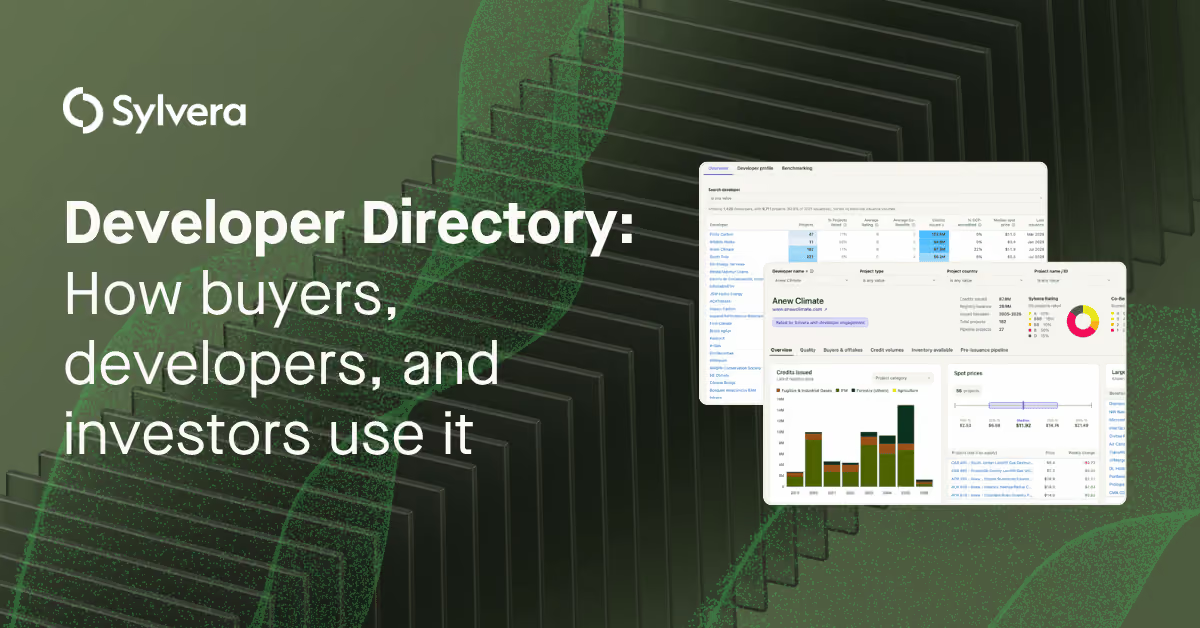
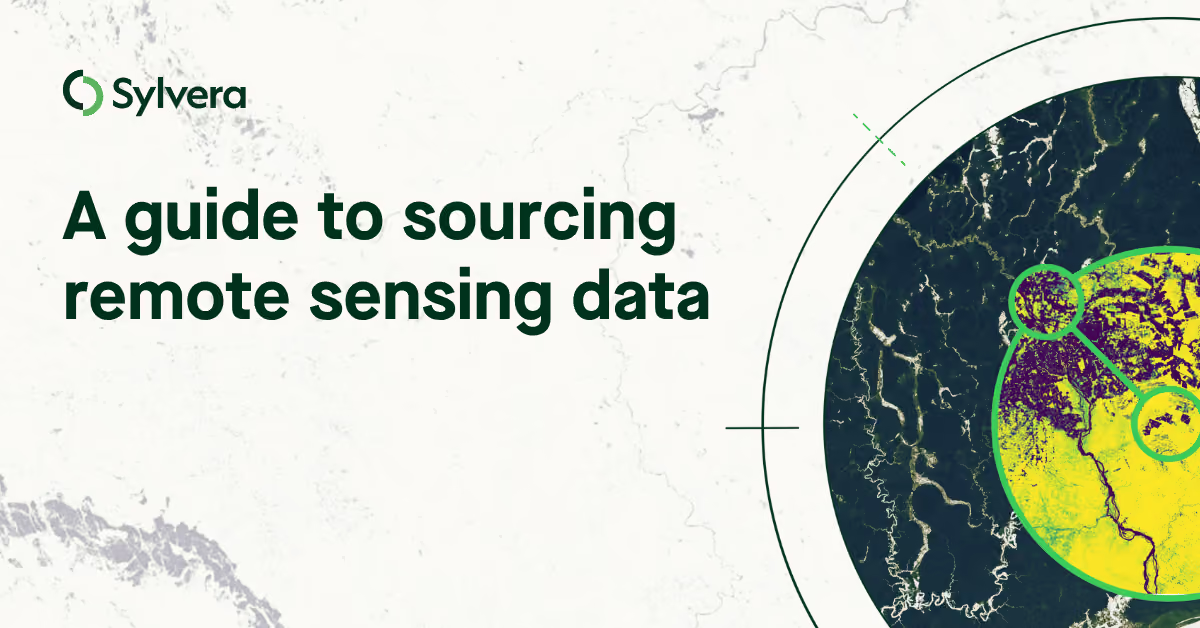
“Over the years we’ve invested significantly in our field data team - focusing on producing trusted ratings. While this ensures the accuracy of our Ratings, it doesn’t allow the scale across the thousands of projects that buyers are considering.”

For more information on carbon credit procurement trends, read our "Key Takeaways for 2025" article. We share five, data-backed tips to improve your procurement strategy.
One more thing: Connect to Supply customers also get access to the rest of Sylvera's tools. That means you can easily see project ratings and evaluate an individual project's strengths, procure quality carbon credits, and even monitor project activity (particularly if you’ve invested at the pre-issuance stage.)
Book a free demo of Sylvera to see our platform's procurement and reporting features in action.
As part of a wider climate action strategy that aims to reduce greenhouse gas emissions, carbon offsets can be an effective way to raise an organization's climate ambition.
But how can organizations engage in global carbon markets and use offsetting to legitimately achieve their climate targets? In this talk, Samuel Gill (Sylvera co-founder and COO) spoke to Marco Magini (Executive Director of Projects & Portfolio Management at South Pole) and Mikkel Larsen (CEO at Climate Impact X) about what offsetting through voluntary carbon markets (VCMs) looks like in practice.
Here are our five key takeaways.
1. Make carbon offsets part of an overall carbon program
Determine your why
Carbon offsets are far more effective when undertaken as part of a broader climate strategy. Companies need to determine why they want to buy carbon credits and how doing so fits into an overall decarbonization strategy. The primary focus should always be reducing one's own carbon emissions, but offsetting carbon is a crucial piece of the puzzle — one that makes organizations more efficient and resilient (by putting a price on carbon), and helps to finance the global transition.
Don't overcomplicate
Carbon markets are complicated, but your offsetting strategy doesn't have to be.
“People often make the perfect the enemy of the good,” Mikkel says. “They think they have to have a perfectly planned out target and a clear pathway before they'll even engage, and that's a real shame with the urgency we have.”
Rather than overcomplicating things, start with the basics. Determine the quantity and type of offset you need to offset your own carbon footprint. Then find a partner who can guide you through some of the complexities, and make sure that what you support high quality carbon projects
Align offsets with corporate goals
Understand the ultimate goal of your offsetting and climate strategy, and what you want to communicate as an organization. Then, focus on aligning your emissions reduction efforts with what you're doing at a corporate, communications, and financial level.
For example, if your core business is in agriculture, you might want to finance projects within the agriculture sector to reduce carbon dioxide while growing food.
2. Focus on quality
Prioritize quality and impact over price
Avoid the temptation to always purchase the cheapest solution. Offsets are a voluntary commitment, so if you go to the trouble to buy offsets, do your homework and buy high quality offsets that align with your organization and prioritize impact. Ask yourself: What's needed in the world right now? Both avoidance and removals projects have a part to play so don't ignore avoidance projects (for example, projects that help avoid deforestation as opposed to projects that plant trees which are removals projects.) These are just as, if not more, important to carbon neutral and net zero goals.
Do your homework
“This narrative that carbon offsets are a shortcut is old,” Marco says. Offsets are essential for most decarbonization strategies, but simply purchasing carbon credits from voluntary markets without thorough assessment, clear intent, and a strong corporate alignment is an ineffective strategy.
“The truth is that there are two types of organizations,” Marco says. “Those that take action to reduce their own emissions, do their homework, and eventually buy offsets; and those that do nothing. And ultimately, history and the free market will judge which of these approaches is successful."
3. Go beyond transactional relationships
Commit to multi-year arrangements
Multi-year commitments offer three main advantages:
- They allow organizations to budget for emissions-reduction costs for years to come
- They help developers plan for the year ahead and ensure security of finance
- They allow organizations to create deeper relationships with the communities and projects they're developing.
Approached in this way, offset purchases become less like transactions and more like partnerships.
Build relationships
Build long-term working relationships with offset projects that align with your brand. Visit the project and invite employees along. Make the relationships public, and turn your offsetting partnerships into an integral part of your brand image—whether you operate in voluntary or compliance markets.
4. Focus on education and evaluation over “buy-in”
Sustainability is top-down
Whereas Chief Sustainability Officers previously had to focus on getting buy-in from above, decisions around sustainability and carbon offsets are increasingly happening at the management level and being handed down from board and C-suite members. This means that CSOs need to focus less on getting CFOs, procurement, and other parties on board, and more on educating them to understand what is required to stay under carbon allowances and/or reach net zero goals.
Help higher-ups choose wisely
CSOs tend to focus on impact, but CFOs and procurement tend to focus on price and risk avoidance. It's helpful if CSOs can explain the choices available, show the price points, and explain why different offsets are priced differently. Many CFOs and treasurers find it easier to evaluate offsets accompanied by ratings, because they are already familiar with this logic of ranking. It's also important to show the particular compliance scheme these offsets fit into.
Communicate strategically about carbon emissions
Externally, most organizations disclose that they purchase offsets, and little more. “I think that's a shame,” Mikkel says. More information needs to be made available for stakeholders, but it also needs to be curated and contextualized so that it's easy to understand. For example, how much carbon does a project sequester? Is this a significant increase over other projects? Does it help you company align with the Paris agreement? It's also important to engage internal stakeholders by working carbon data into internal communications and giving employees a chance to see projects.
5. What's next for carbon offset markets
Ultimately, carbon offsets are, more than ever, a crucial part of net zero and climate action strategies for private organizations. If current market forces give us any indication, it looks as though we'll see voluntary carbon markets grow in the years to come, as more organizations and governments around the world recognize the need for carbon offsets in the urgent response to climate change.
To understand more about VCMs and how the market is evolving, download our Guide here.