

“Over the years we’ve invested significantly in our field data team - focusing on producing trusted ratings. While this ensures the accuracy of our Ratings, it doesn’t allow the scale across the thousands of projects that buyers are considering.”

For more information on carbon credit procurement trends, read our "Key Takeaways for 2025" article. We share five, data-backed tips to improve your procurement strategy.
One more thing: Connect to Supply customers also get access to the rest of Sylvera's tools. That means you can easily see project ratings and evaluate an individual project's strengths, procure quality carbon credits, and even monitor project activity (particularly if you’ve invested at the pre-issuance stage.)
Book a free demo of Sylvera to see our platform's procurement and reporting features in action.
As of now, the voluntary carbon market is better at defining quality than it is at reliably pricing it.
While integrity frameworks and rating systems help buyers assess carbon credits for credibility, developers struggle to clarify how quality improvements translate to financial outcomes. This makes it hard for buyers to determine if the premium on a "high-quality carbon credit" is justified, or for investors to deploy capital into long-term projects with developers.
Bridging this gap between developers and the buy-side of the market demands live market intelligence, rating-price correlation data, and transparency on what comparable carbon offset projects actually trade for.
Quality Has Become Table Stakes — But Value Still Lags Behind
Every project developer, broker, and buyer talks about "quality" in the carbon credit market. But there's a problem: little transparency exists around quality carbon credit worth.
Developers pour capital into continuous improvements and enhanced monitoring systems, hoping to boost their project's rating and marketability, but can't quantify the ROI. Meanwhile, buyers pay for "higher quality credits" to offset carbon emissions, but don't have reliable benchmarks to justify costs.
The result? A gap between perceived quality and real pricing signals. In other words, the market knows that quality matters, but it hasn't built the infrastructure to price quality consistently.
Why the Disconnect Exists in the Carbon Credit Market
There are several factors that make it difficult to translate quality into carbon credit value. Once you understand these factors, you can take steps to address them—whether you buy or sell carbon credits.

For all the latest intelligence around pricing, quality, and demand trends, check our comprehensive State of Carbon Credits report.
1. Opaque Pricing
A significant volume of carbon credit purchases happen through private over-the-counter deals.
Unlike compliance markets with transparent emissions trading systems, the voluntary carbon credit market isn’t as clear. While benchmark data exists, it's scattered across registries, brokers, and private databases. As such, it's hard for market participants to understand what a "good" price is.
In addition, developers lack visibility into current price bands for their specific category, whether that's ARR (afforestation, reforestation, and revegetation), IFM (improved forest management), cookstoves, or renewable energy projects. Without this visibility, pricing is guesswork, not strategy.
2. Quality Signals Don't Automatically Translate to Price
Integrity ratings and validation frameworks measure impact risk, not economic value.
To clarify, an integrity rating tells you about emissions reduction quality and delivery confidence. A validation framework ensures carbon projects reach specific quality standards. Neither quantifies value.
Without historical data linking quality tiers to actual pricing outcomes, the market can't price differentiation accurately. It needs more information than it typically receives.
3. Developers and Buyers See Different Sides of the Equation
Finally, the information gap creates asymmetries between buyers and developers.
Developers base investment decisions on remediation without knowing if "investment grade" quality will translate to higher prices. For example, should they invest $XXX to upgrade monitoring equipment? Without data, developers can't see the relationship between quality improvements and market value.
At the same time, buyers struggle to benchmark fair pricing across categories and vintages. Is $XX per metric ton reasonable for an A-rated ARR project from this vintage? How does that compare to similar projects? Without access to comparable transaction data, buyers are purchasing blind.
What It Takes to Close the Gap
To bridge the quality-value gap, market participants need market transparency, rating/price correlations, supply and demand intelligence, and scenario modeling. Let's discuss each...
.avif)
Market Transparency
Buyers and sellers need access to comparable, verified transaction data across registries and brokers.
This means more than isolated data points. It requires comprehensive benchmarks at the sector and methodology level that show what's actively trading and where prices cluster.
After all, carbon projects that use different methodologies face different market dynamics. Renewable energy projects, for example, operate in different supply and demand conditions than nature-based solutions. Cookstove projects appeal to different buyer segments than carbon removal credits or direct air capture technologies. Benchmarks recognize these distinctions with category-specific intelligence.
Rating–Price Correlation
The market needs quantified evidence to show how rating tiers affect achievable pricing.
For instance, does an A rating from Sylvera translate to a significant price premium, or does it not matter? This correlation must be grounded in transaction data, not theoretical models.
With clear rating-price data, developers can decide if improving integrity and delivery confidence will yield financial returns. As such, quality improvement transforms into a strategic business decision.
Supply and Demand Intelligence
Both sides of the market need visibility into inventory dynamics.
Who's buying? What methodologies are oversupplied? Which project types face supply constraints? This intelligence helps developers position their projects strategically and buyers avoid mispricing.
Accurate supply dynamics can also reveal market opportunities. For example, if high-quality ARR projects in a specific region are undersupplied while buyer demand is strong, developers can prioritize the development of these projects. If certain methodologies are oversaturated, buyers gain leverage.
Scenario Modeling
Finally, developers need tools to model pre- and post-improvement scenarios.
What's the potential revenue lift from improvement actions? How much extra value can be gained through a better verification cadence, CORSIA elibility, or stronger community engagement protocols?
Scenario modeling makes the business case for quality tangible. Instead of abstract commitments to "high integrity," developers can quantify potential returns and make investment decisions based on evidence. This shifts the conversation from moral imperatives to sound economics.
Bridging Quality and Value — What the Data Shows
When transparent data is available, patterns emerge that illuminate the quality-value relationship:
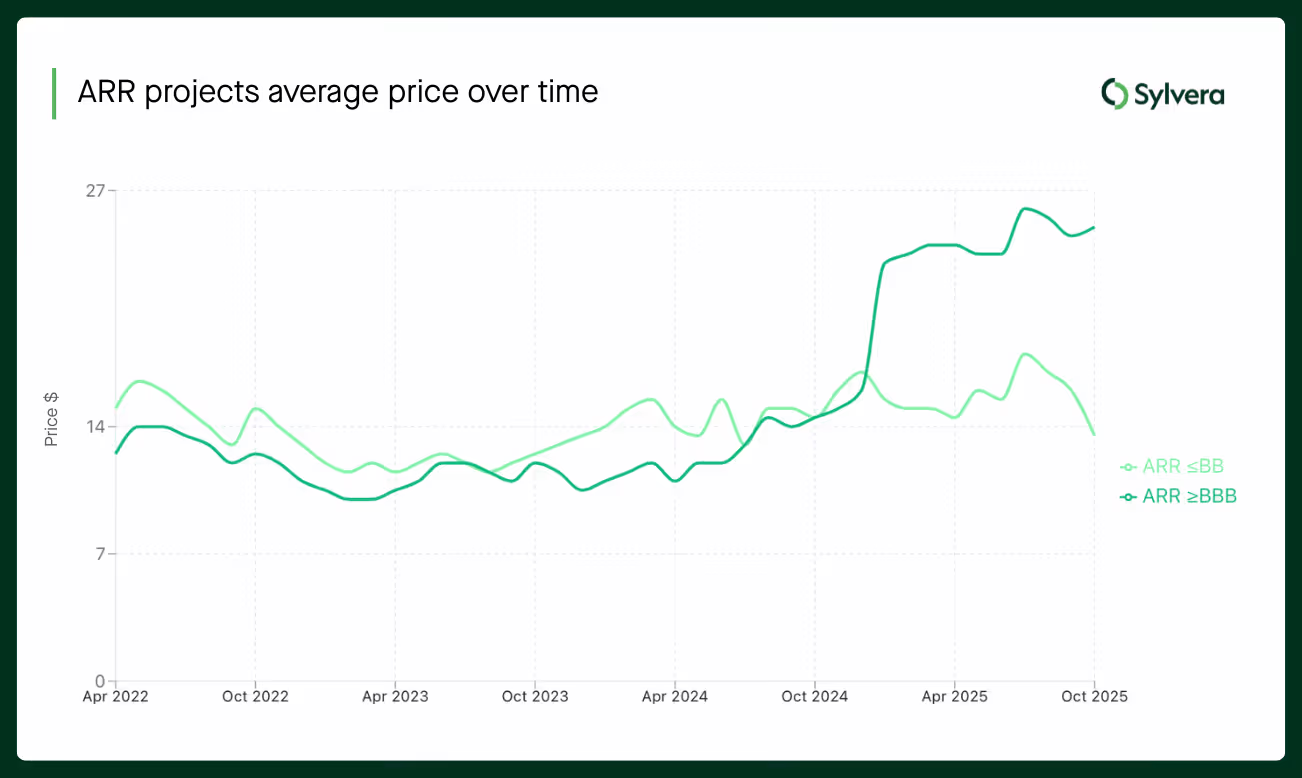
- Rating–Price Relationship Example: ARR projects with a Sylvera rating of BBB+ are now averaging $26+, whereas BB- rated projects, are at $14. These prices were tracking basically the same at the start of 2025 (see chart below).. This reflects buyers' growing willingness to purchase carbon credits with reduced delivery risk and stronger integrity indicators.
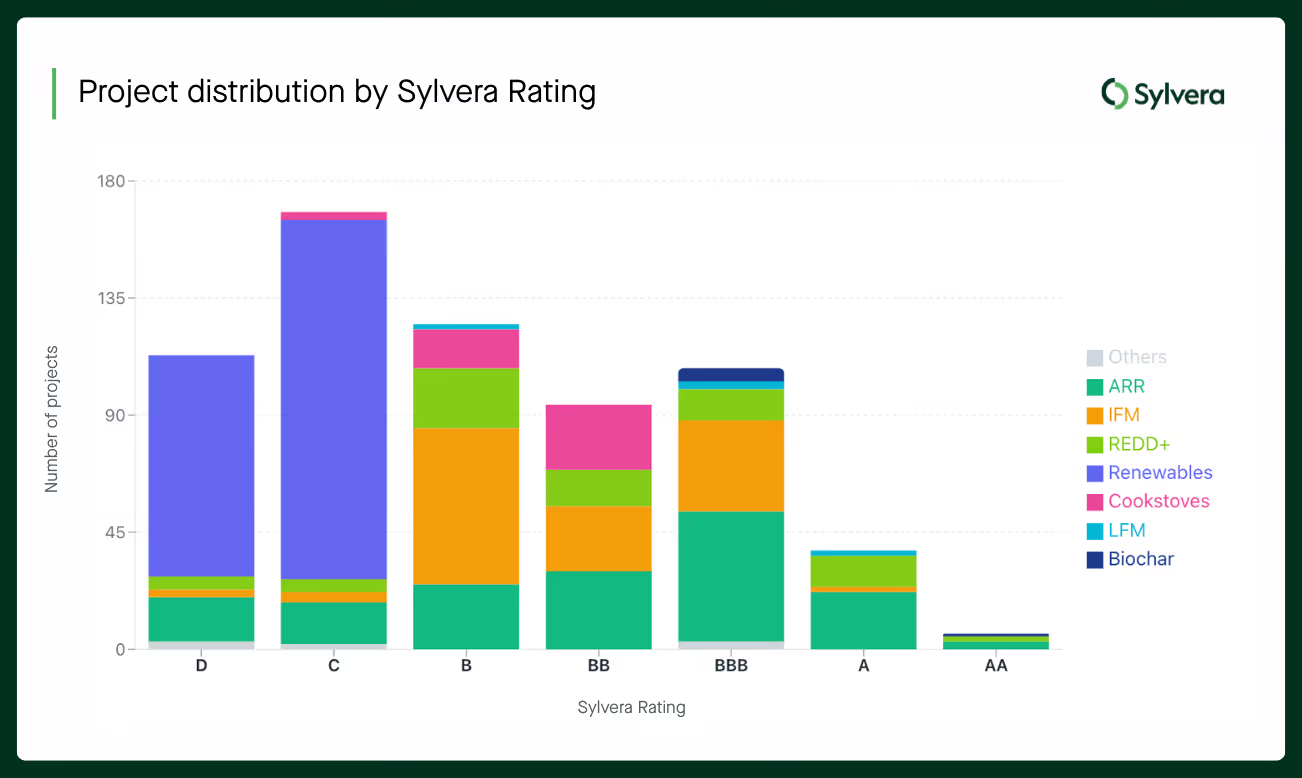
- Market Activity Snapshot: Most nature-based credits cluster around the mid-tiers (see ARR, IFM and REDD+ projects in the chart below), which indicates significant untapped potential for higher-rated projects. This suggests the supply of high-quality projects is constrained, or that buyers haven't fully internalized the value proposition of premium credits. Either way, it represents an opportunity for developers who invest in quality.
- Buyer Behavior: Most corporates seek credits with a strong verification cadence and published monitoring, reporting, and verification (MRV) data. As companies face scrutiny over their net zero goals and carbon footprint reduction claims, they gravitate toward carbon offset programs with robust documentation. This shift in buyer behavior creates economic incentives for quality.
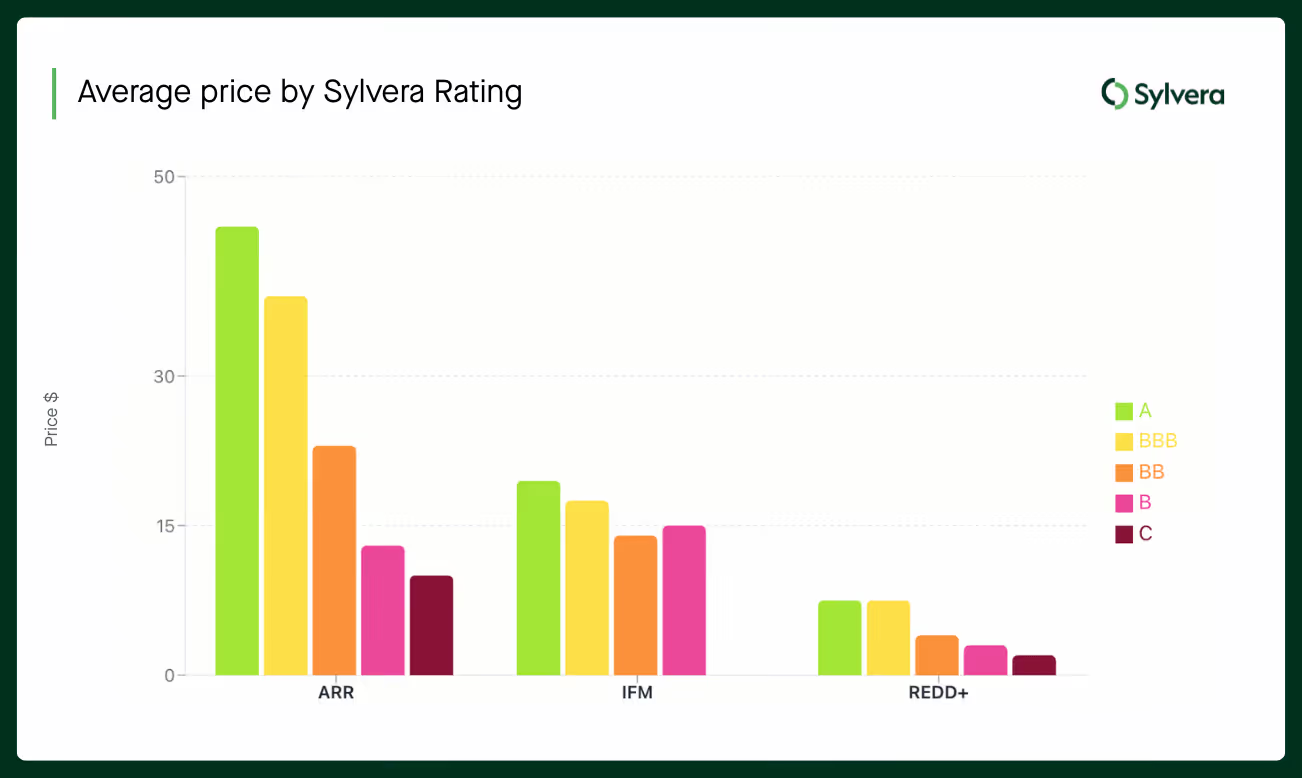
- Developer Impact: Our data shows an average price uplift of $15 for projects moving from BB($23) to BBB($38) rating categories (see chart below). This quantified return changes the calculus around quality investments. Developers can now compare the cost of improvements against expected revenue increases and make rational investment decisions. This often leads to better profit margins.
The Financial Case for Quality Carbon Offsets
Quality improvements aren't just about impact. They directly influence the average price of carbon credits. This is fundamental to how developers are now making strategic decisions.
Developers can justify investment in enhanced MRV systems, community engagement protocols, and/or baseline methodology updates with evidence-backed pricing data. Why? Because the business case for quality becomes concrete. When you can show that a $150,000 investment in improved monitoring can generate $3m in additional revenue, the decision to invest is straightforward.
Buyers, on the other hand, gain pricing confidence that supports high-integrity procurement strategies. Corporate sustainability teams can demonstrate to CFOs that higher quality credits are a sound investment. When you can benchmark your purchases against comparable transactions—and show that you paid market rate for equivalent quality—procurement decisions are defensible.
Finally, investors gain clearer exit and valuation assumptions. Private sector investment in carbon projects has grown substantially, but valuation uncertainty has constrained capital flows. With transparent quality-value relationships, investors can model returns with greater accurately and price risk with more precision. This clarity attracts sophisticated capital to the market.
The Role of Data and Market Intelligence
Transparency tools and live pricing dashboards are essential to a healthy voluntary carbon market. Without them, information asymmetry creates inefficiencies and erodes trust.
Fortunately, standardized quality-value relationships build trust and liquidity. When buyers can rely on rating-price correlations, they gain confidence. When developers understand the financial implications of quality investments, they allocate capital more efficiently. These improvements compound: more transparency attracts more participants, which generates more data, which enables transparency.
Evidence-based valuation of carbon credit can finally make "high integrity" more than a buzzword. The market spent years developing robust methodologies to assess carbon dioxide reduction and greenhouse gas emissions mitigation. Now it needs equally robust methodologies to price them.
How Sylvera Helps Close the Gap
Sylvera's Pre-Issuance Solution solves the "carbon credit value" problem with its Value Module, working alongside the Integrity and Delivery Modules to provide comprehensive project assessments.
Specifically, the Value Module quantifies the financial impact of improving an early-stage project's predicted rating at issuance. Sylvera also has visibility across live comparable prices for similar projects by category, geography and rating tier, drawing on anonymized transaction data across the market. Whether you're a developer, investor, or buyer, you can access supply-demand analytics that inform pricing and investment decisions with Sylvera.
This functionality extends across all project types, covering the full spectrum of the market from renewable energy projects to nature-based solutions and CDR. The goal is straightforward: give market participants the information they need to see how quality affects value.
Understand how quality translates to value in the voluntary carbon market. Explore Sylvera's Value Module—now part of the Pre-Issuance Solution. Sign up for a free demo today.
Win in the Voluntary Carbon Market
The carbon market won't fully mature until quality is linked to value.
Data-driven transparency, revealed via rating-price correlation, comparable benchmarks, and live market intelligence, gives all market participants the tools to connect integrity and economics.
When quality becomes quantifiable, the entire market benefits.
For all the latest intelligence around pricing, quality, and demand trends, check our comprehensive State of Carbon Credits report.