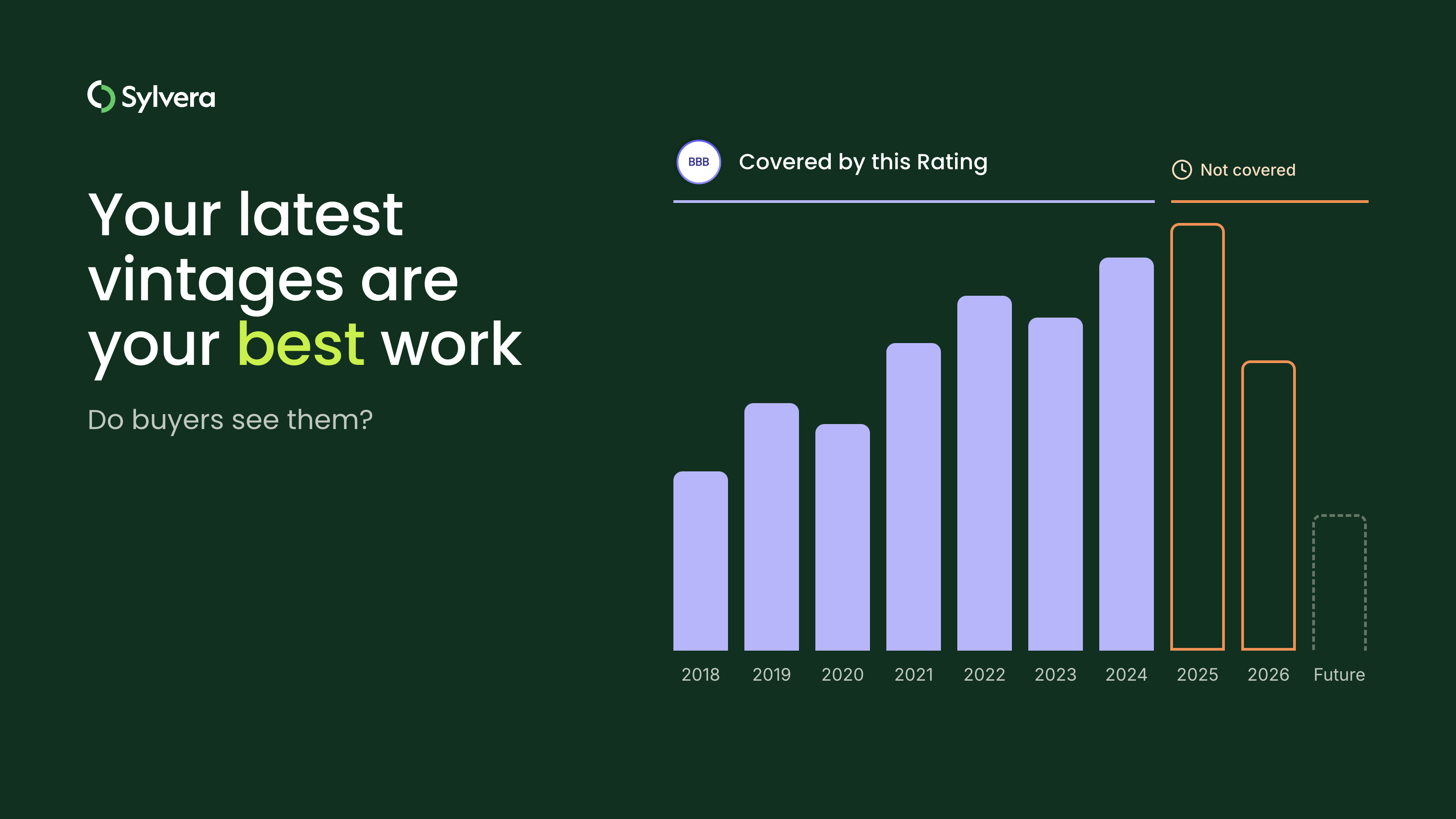




“Over the years we’ve invested significantly in our field data team - focusing on producing trusted ratings. While this ensures the accuracy of our Ratings, it doesn’t allow the scale across the thousands of projects that buyers are considering.”

For more information on carbon credit procurement trends, read our "Key Takeaways for 2025" article. We share five, data-backed tips to improve your procurement strategy.

One more thing: Connect to Supply customers also get access to the rest of Sylvera's tools. That means you can easily see project ratings and evaluate an individual project's strengths, procure quality carbon credits, and even monitor project activity (particularly if you’ve invested at the pre-issuance stage.)
Book a free demo of Sylvera to see our platform's procurement and reporting features in action.
Cookstoves: a project type with promise, but historical problems
Cookstove projects address one of the most tangible intersections between poverty and emissions. In many parts of the world, households cook on open fires or inefficient stoves using firewood or charcoal — practices that generate significant greenhouse gases, cause harmful indoor air pollution, and place pressure on local forests.
Distributing cleaner, more efficient cooking technologies reduces emissions, improves health outcomes, and cuts household fuel costs. The co-benefits are genuine and substantial.
But for much of the last decade, the integrity of the carbon accounting underpinning these projects has been in serious question.
The problems were structural. Legacy methodologies, including Verra's VMR0006 and Gold Standard's TPDDTEC, allowed projects to use inflated fNRB (fraction of non-renewable biomass) values calculated via the outdated CDM Tool30. This was seen to overstate the proportion of biomass considered non-renewable and therefore over-credit emission reductions.
Monitoring standards were weak too:
- Stove use was often assessed through infrequent surveys rather than direct measurement
- Stacking (households continuing to use traditional stoves alongside project stoves) was poorly tracked
- Fuel savings were estimated from efficiency assumptions rather than actual measurement
A 2023 UC Berkeley paper on over-crediting in cookstove projects crystallised the concern, and the ICVCM's subsequent decision to exclude most existing cookstove methodologies from Core Carbon Principles (CCP) approval was a significant signal that the status quo was insufficient.
Decisions by the UNFCCC for Article 6.4 alignment in May 2025 made clear that existing methodologies were not aligned with the Paris Agreement.
And the recent KOKO Networks collapse, which drew significant attention to the reputational risks attached to the category, only reinforced the need for serious reflection. Not just about individual projects, but about what governance, community-level delivery, and credibility look like in practice.
While there are clear short-term reputational consequences for markets like Kenya, it's worth noting that the country has taken a genuinely forward-looking approach to carbon, and when developed properly, cookstove projects can deliver meaningful upside for communities in ways that few other project types can match.
The cookstoves quality trajectory is real
The good news is that the overall recent trajectory has been meaningfully positive.
Methodologies have been significantly tightened. CDM Tool30 will be withdrawn in 2026. Methodologies are converging on conservative fNRB defaults, either a 30% floor or national/regional defaults derived from the MoFuSS model, developed by the University of Mexico and the Stockholm Environment Institute.
The old approach of estimating fuel use from assumed efficiency gains has been replaced with requirements for direct measurement:
- Improved biomass cookstoves now require periodic Kitchen Performance Tests (KPTs)
- Fuel-switch projects require direct metering of fuel and energy use
The major methodology changes - Verra's retirement of VMR0006 in favour of VM0050, Gold Standard's updated TPDDTEC, and Gold Standard's Methodology for Metered and Measured Energy Cooking Devices - have all now received CCP labels from the ICVCM. This is a meaningful signal. The integrity infrastructure the market has been building is starting to converge on a smaller set of genuinely higher-quality approaches.
Looking further ahead, the Clean Cooking Alliance's CLEAR (Comprehensive Lowered Emissions Assessment and Reporting Methodology for Cooking Energy Transitions) has been submitted to the UNFCCC and could become the standard for Paris-aligned cookstove accounting, potentially unifying the methodology landscape under a single framework.
Market behaviour is shifting too. Developers are actively transitioning to new methodologies. Gold Standard released a new Paris-aligned methodology in April 2026, with projects waiting on it before issuing 2026 vintages — a direct reflection of buyer demand for methodology upgrades. Developers are pursuing market labels (CCP approval, Article 6.4 alignment, CORSIA eligibility) as signals of quality that support both demand and price.
It's worth being clear about the trade-offs. Issuance reductions under stricter methodologies are not trivial. Conservative fNRB assumptions alone are expected to reduce credit volumes by 40–60%, with more extreme cases potentially hitting 70–80%.
This has significant implications for project viability, supply dynamics, and the transition period as developers adapt. The market's confidence in these quality signals will ultimately determine whether prices and demand recover to make projects financially sustainable at lower issuance volumes.
Find out more about Article 6 authorizations in our recent explainer blog here.
The CORSIA opportunity for cookstoves, and the supply gap
Against this backdrop, cookstove credits are becoming increasingly relevant to CORSIA compliance. But the supply picture is more constrained than it might first appear.
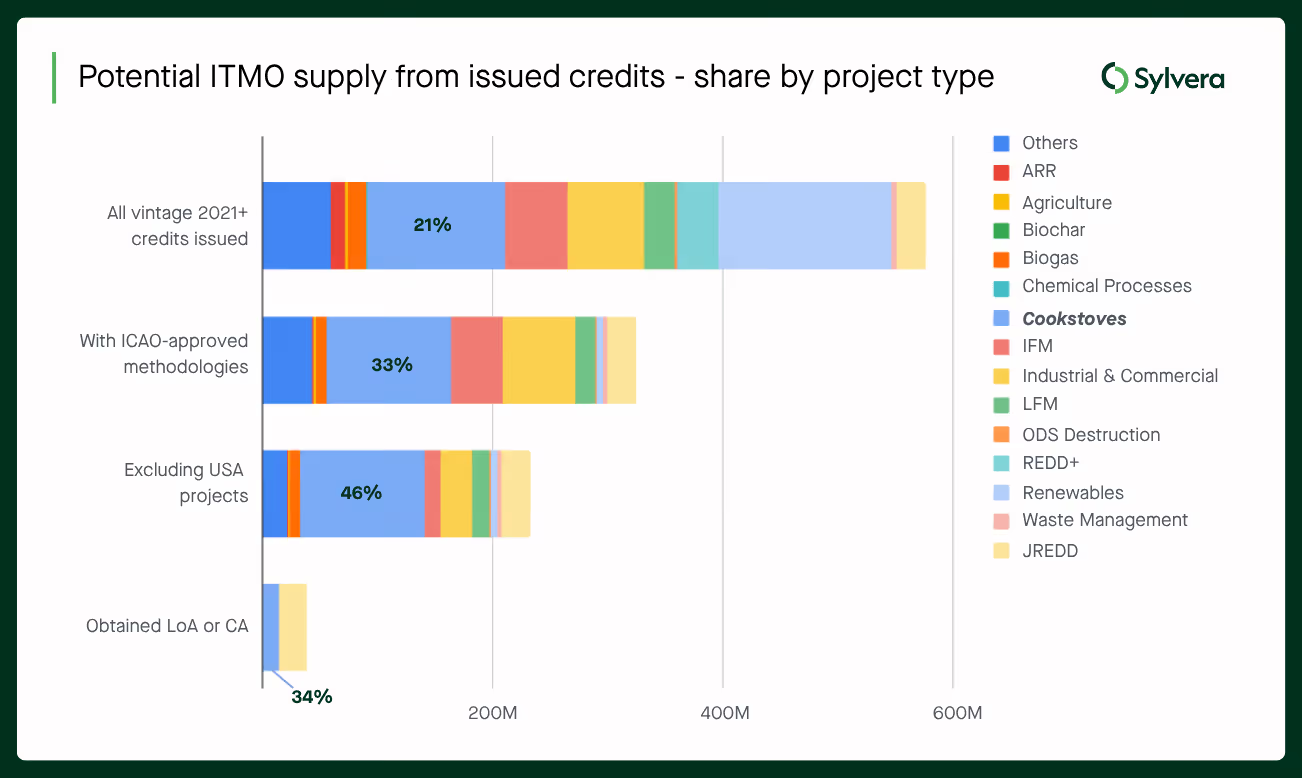
Sylvera's analysis of the potential ITMO supply pipeline tells an interesting story:
- Of all vintage 2021+ credits issued, cookstoves represent around 12 million credits — roughly 4.5% of the total pool
- But of credits that have obtained a Letter of Authorization or a full corresponding adjustment (the minimum requirement to qualify as ITMOs for CORSIA), cookstoves account for 13.1 million credits — around 34% of the entire authorised pool
- That makes cookstoves the single largest authorised project type
The critical gap is methodology approval. Cookstoves currently have zero credits with ICAO-approved methodologies, meaning that despite their significant authorisation potential, they are not yet eligible for CORSIA compliance under the current approved pathway. If and when methodologies like VM0050 gain ICAO approval, cookstoves could represent a very significant share of CORSIA supply. But that transition is not yet complete.
For buyers targeting CORSIA compliance, this means cookstoves are at a pivotal moment. Not yet broadly eligible, but rapidly approaching eligibility, and likely to become one of the most substantial sources of compliant supply when they do.
See our market modelling and analysis of future CORSIA pricing, supply and demand scenarios here.
Sylvera’s updated cookstoves framework
To reflect the significant changes in the cookstove landscape, Sylvera has released an updated Cookstove Ratings Framework (V2.0), developed in consultation with an external Framework Review Committee.

What’s been updated:
Carbon Accounting is now a first-class pillar. Previously, Sylvera issued provisional ratings for cookstoves because remote sensing — used to independently assess emissions claims in forestry — couldn't be applied to this project type. The V2.0 framework moves beyond provisional ratings by directly evaluating carbon monitoring and accounting approaches, covering over-crediting risk under a dedicated Carbon Accounting score. Provisional Carbon Scores have been retired.
The Carbon Accounting pillar now assesses two components:
- Project Reporting — how fuel savings are measured and monitored, covering fuel consumption methods, stove usage monitoring, and stacking monitoring
- Carbon Modeling Risk — how those savings are translated into tCO2e, covering fNRB values, emission factors benchmarked against IPCC defaults and the WHO cooking fuel database, usage rate conservatism, stove stacking adjustments, uncertainty deductions, and leakage
Additionality is now grounded in project activities. The updated framework moves away from over-crediting risk sitting within additionality (which has been relocated to Carbon Accounting) and instead focuses the Additionality score on genuine evidence that project activities go beyond business-as-usual. This covers:
- Common practice (assessed against WHO cooking fuel data, market penetration, and access to clean fuels)
- Policy and regulatory context (using a database of over 70 policies across 50 countries, moderated by World Bank governance indicators)
- Financial additionality (IRR analysis with and without carbon credits, alongside an assessment of the project's business model and distribution approach)
Fuel-switch and metered and measured stoves are now covered. The framework has been expanded beyond improved efficiency biomass stoves to include projects distributing stoves that switch households to LPG, biogas, ethanol, or electricity — reflecting the evolution of the market and the recognition that fuel-switch projects represent a different but legitimate category.
Safeguarding and Co-benefits have been combined into a holistic beyond-carbon assessment. Rather than treating these as separate, the framework now evaluates whether a project achieves a net benefit for communities and biodiversity, using a gated risk assessment approach anchored to UN SDG contributions. ISO tier classifications for stoves are used to assess the quality and ambition of co-benefits, including health impacts, fuel cost reductions, and forest pressure.
What this means for buyers and developers
For buyers: With CORSIA compliance demand growing and cookstoves emerging as a dominant portion of the authorised ITMO pipeline, buyers with long-term compliance obligations should be thinking carefully about which projects in this space will hold up to scrutiny. The gap between projects developed under legacy methodologies and those developed under VM0050 or updated TPDDTEC is significant — and our updated framework makes that distinction explicit.
For developers: The direction of travel is clear. Projects with robust direct monitoring, conservative fNRB values, and strong community engagement will command credibility and attract buyers willing to pay for quality. The transition is demanding, but the developers investing in it are positioning themselves for a more durable market.