
Build market infrastructure on trust and integrity
Participate in Article 6. Advance national climate agendas with trusted data and policy expertise.
Drive carbon market implementation with credibility and rigor.
Buy high-integrity credits under Article 6
Screen internationally transferred credits for your national climate targets. Identify ITMOs meeting integrity standards, understand fair market pricing, and assess host country authorization readiness before committing to purchases.

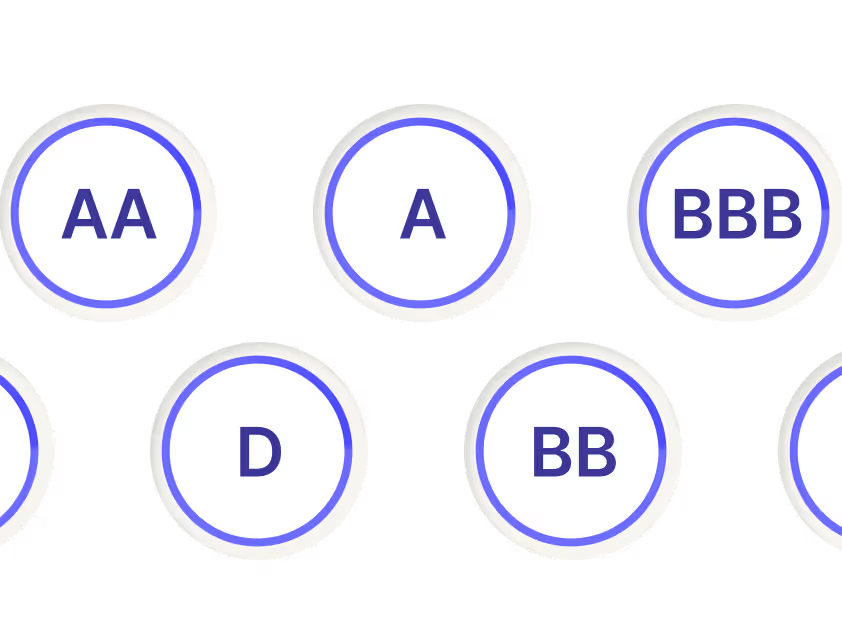
Ratings evaluate projects across additionality, permanence, and co-benefits. Market Intelligence shows pricing and availability. Country Profiles assess host nation LoA readiness and authorization risk.
Sell Article 6 credits at optimal prices
Authorize credit sales from domestic projects with confidence. Understand what international buyers pay for credits like yours, model revenue scenarios, and set authorization terms that balance climate ambition with economic opportunity.
Market Intelligence provides price estimates showing what buyers pay by project type, quality rating, and geography. Market forecasts model future demand across voluntary, CORSIA, and Article 6 markets, informing optimal timing and pricing for credit sales.
Leverage biomass data for nature-based credit sales
Independently verify carbon stock claims for forestry projects in your jurisdiction. Monitor project performance transparently and provide credible data supporting corresponding adjustment decisions for nature-based solution credits.
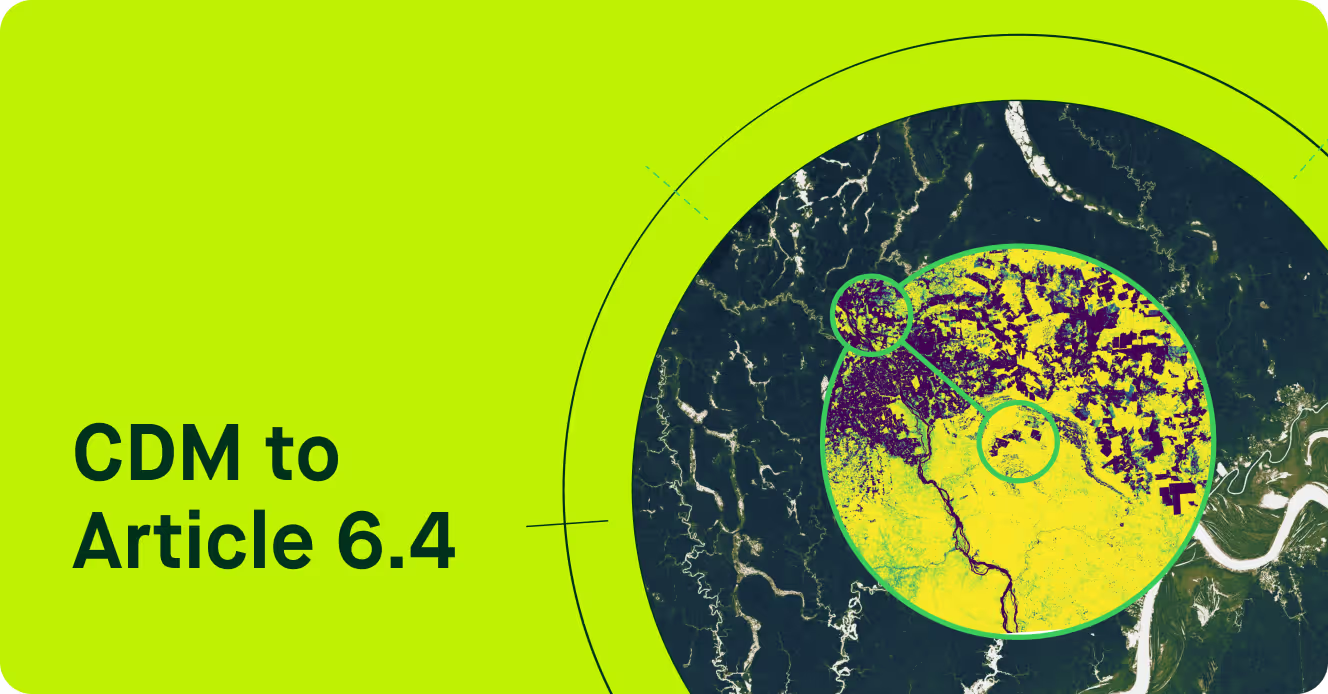
Biomass Atlas provides wall-to-wall forest coverage with 25 years of historical data supporting jurisdictional baselines, NDC reporting, and transparent verification for NBS credit authorization.
Design domestic systems with international standards
Build credit-allowing domestic systems that maintain integrity while maximizing market access. Set quality guardrails, model price impacts, and align with international frameworks to reduce fragmentation.
Ratings frameworks align with ICVCM CCP and CORSIA eligibility. Methodology Profiles show international quality standards. Market Intelligence provides price modeling for fee-setting and economic impact analysis. Country Profiles benchmark peer system designs.
From policy complexity to market opportunity.
With national credibility and climate goals in mind, you need to identify high-integrity credits, drive domestic schemes, and participate confidently in Article 6.
What you’re facing

Built for policy makers driving climate action with integrity
Combine independent quality validation, comprehensive market intelligence, and expert policy analysis to support climate planning and participation.


FAQs
You access independent quality assessments, comprehensive market intelligence, and expert policy analysis, supporting evidence-based decisions on Article 6 participation, fee setting, and domestic system design.
Governments building carbon market infrastructure need to ensure integrity to maintain public trust, set policies that balance climate ambition with economic opportunity, and participate in international frameworks like Article 6.
Sylvera provides the foundation: independent Ratings screening high-integrity credits, Market Intelligence revealing market scale and pricing dynamics, Country Profiles benchmarking peer approaches, expert analysis translating complexity into actionable insights.
You screen ITMOs using independent quality assessments, understand market pricing and availability, and benchmark against peer nation approaches - whether buying credits or authorizing sales.
Article 6 participation requires technical capacity for credit evaluation, market intelligence for pricing negotiations, and policy frameworks for corresponding adjustments.
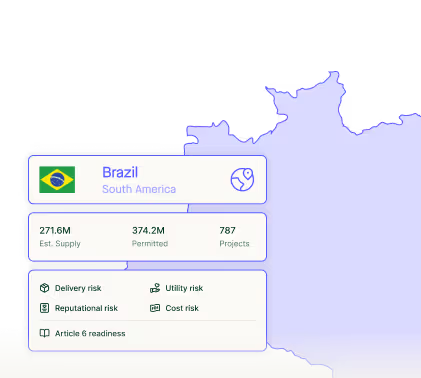
Sylvera Ratings provide the quality screening infrastructure. Market Intelligence shows ITMO availability, pricing across voluntary and Article 6 markets, and transaction patterns. Country Profiles reveal how peer nations structure CA frameworks, issue LoAs, and balance domestic climate goals with international credit participation. This enables evidence-based Article 6 strategy.
Access supply-demand forecasts and transaction volume data showing market scale, growth trajectories, and revenue potential by methodology and geography.
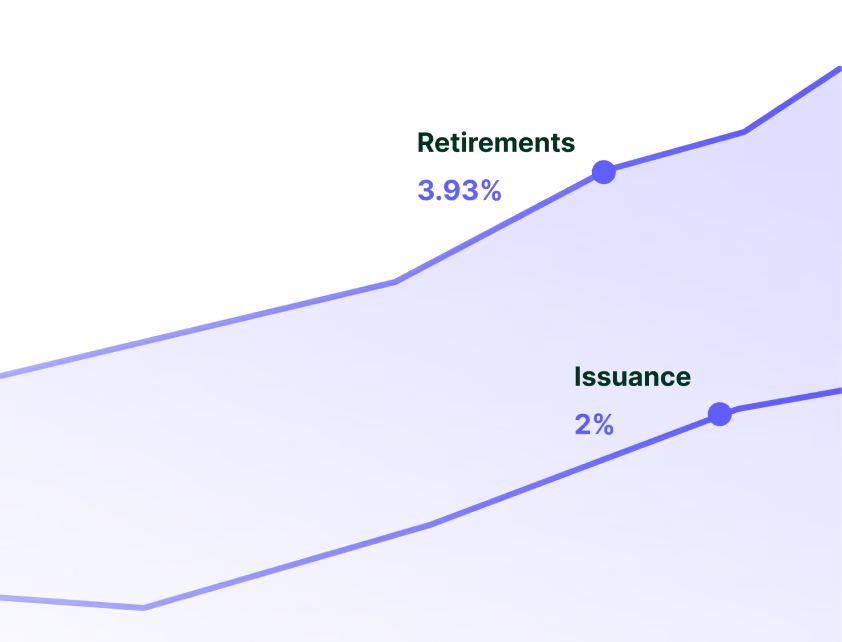
When planning carbon market infrastructure investment or policy development, understanding economic scale is essential. Market Intelligence shows historical transaction volumes, current issuance rates, and forward demand projections through 2050 across voluntary, CORSIA, Article 6, and domestic compliance markets.
For jurisdictions hosting projects, this reveals potential revenue from registration fees, issuance fees, and CA authorizations. For jurisdictions considering ITMO purchases, forecasts show supply availability and pricing trends, informing budget planning.
You receive expert analysis translating regulatory changes, methodology revisions, and market developments into clear policy implications.
Carbon markets evolve rapidly with methodology updates, regulatory changes, and international framework developments. Market Commentary provides curated expert analysis on significant developments: CORSIA methodology eligibility updates, Article 6 implementation progress, domestic compliance system launches, registry requirement changes.
Rather than monitoring dozens of sources, you receive consolidated updates with "Sylvera's Take" on implications. When ICAO announces CORSIA changes or major economies launch domestic systems, you understand policy impacts immediately—how developments affect your national strategy, what opportunities or risks emerge, which peer nations are affected similarly.
You reference international quality standards and market benchmarks, designing systems that maintain integrity while maximizing market access and aligning with global frameworks.
Domestic systems risk fragmenting global markets if created outside of international frameworks. Sylvera's Ratings methodology aligns with ICVCM CCP, CORSIA eligibility, and major registry standards, providing common reference points. And Methodology Profiles show which approaches meet rigorous international standards.
When setting domestic eligibility criteria, you see which methodologies and project types satisfy global quality thresholds. This prevents allowing low-quality credits (damaging integrity) or excluding high-quality projects (limiting supply).
Book a demo
Explore the carbon data powering real-world investment and procurement decisions.