



%20ratings.avif)


“Over the years we’ve invested significantly in our field data team - focusing on producing trusted ratings. While this ensures the accuracy of our Ratings, it doesn’t allow the scale across the thousands of projects that buyers are considering.”

For more information on carbon credit procurement trends, read our "Key Takeaways for 2025" article. We share five, data-backed tips to improve your procurement strategy.
One more thing: Connect to Supply customers also get access to the rest of Sylvera's tools. That means you can easily see project ratings and evaluate an individual project's strengths, procure quality carbon credits, and even monitor project activity (particularly if you’ve invested at the pre-issuance stage.)
Book a free demo of Sylvera to see our platform's procurement and reporting features in action.
Improved Forest Management (IFM) projects can increase net carbon stocks or reduce carbon dioxide and other greenhouse gas (GHG) emissions through changes to existing forest management practices.
Forest management activities could include rotation extension, thinning, and change in harvesting techniques. But exactly which management activities are allowed in the projects is determined by registry methodologies. Uniquely, 93% of the issued IFM credits are from North American projects and 78% of all projects sit within the Climate Action Reserve (CAR) registry--and only 4% on Verra.
North American projects, specifically those in Canada and the United States, are prevalent because they are a legacy of the California compliance market and the compliance forest offset protocol or, California Air Resources Board (ARB). As such, these countries produce many carbon offsets.
For a deep dive into our IFM ratings framework, download the white paper.
How Sylvera Thinks About IFM Carbon Credit Quality
Sylvera develops project-type specific frameworks to capture material attributes of carbon projects and create comparable quality metrics that enable users to transact with confidence.
Our IFM ratings synthesize data from diverse sources including project documentation, multimodal remote sensing data, climate modeling, historic weather data, socioeconomic data, media sources, government policy documents, academic publications, and proprietary machine learning models. These data sources inform our sub-indicators that roll up into our Sylvera rating and core scoring pillars.
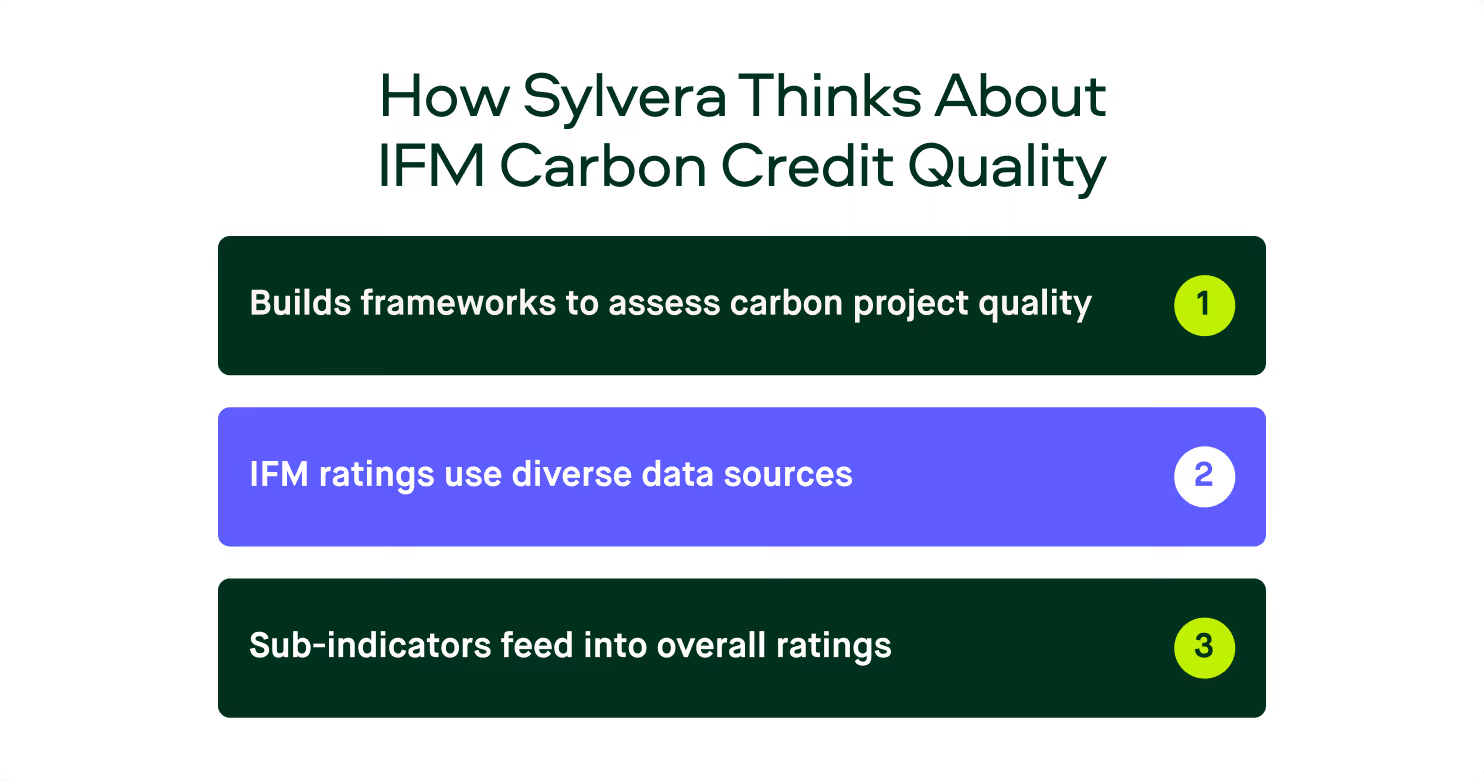
Sylvera Rating Process for IFM Projects
IFM projects are a natural climate solution. As such, our rating is derived from a combination of carbon, additionality, and permanence scores. These three core pillars are combined in a series of matrices to ensure that underperformance in one area does not get overshadowed by high performance in others.
Carbon Score
Our carbon score validates whether the project has delivered on its emissions reductions/removals by comparing Sylvera detected canopy cover and harvesting with data reported by the project. We leverage proprietary machine learning (ML) models and satellite data to track the performance of the project area, utilizing canopy cover changes associated with different forest management practices.
Additionality
Sylvera's additionality score assesses whether (1) emissions reductions above and beyond what would have occurred in the “business as usual” case have materialized as a direct result of revenue from carbon removal or carbon storage, and (2) the likelihood and severity of over-crediting risk that emanates from a faulty baseline scenario, gerrymandering, or leakage.
The additionality score is a blended view of whether the projects' activities would only have taken place as a result of the offset project revenue (additionality of activities,) and a measure of whether any additional climate benefit has been overstated in terms of crediting volume (over-crediting risk).

Permanence
Permanence refers to the risk that the avoided emissions will later be reversed and released back into the atmosphere. Our permanence score uses a risk matrix approach for each of the six major risks to carbon stock. The final score considers the additive and maximum risks present in the project.
The input of climatic variables, record of past events, project specific conditions and mitigative activities are then used to inform the risk scoring. We also consider the interactivity of risks present.
Permanence is conceptualized as a scale that distinguishes the relative degree of non-permanence (or reversal) risk between projects. It's essential for accurate carbon quantification of forest conservation. High quality IFM projects mitigate reversal risk and generate better offset credits.
Co-Benefits
Sylvera's co-benefits rating examines the extent to which the project is implementing activities to support local biodiversity and communities, as well as the scale and likely impact of these activities.
IFM projects are managing an ecosystem. That background level of biodiversity can either be protected, promoted, or come to harm as a result of project management activities. We use geospatial analysis and leverage our partnership with IBAT to assess the background level of biodiversity that is within the project area, using threatened species, biodiversity, and protected area data.
When assessing community impact, we utilize data disclosed by project developers and the SDG framework to triangulate a project's community impact based on core principles.
Fight Climate Change With Sylvera's IFM Ratings
Sylvera's IFM ratings framework brings transparency and confidence to forest carbon projects.
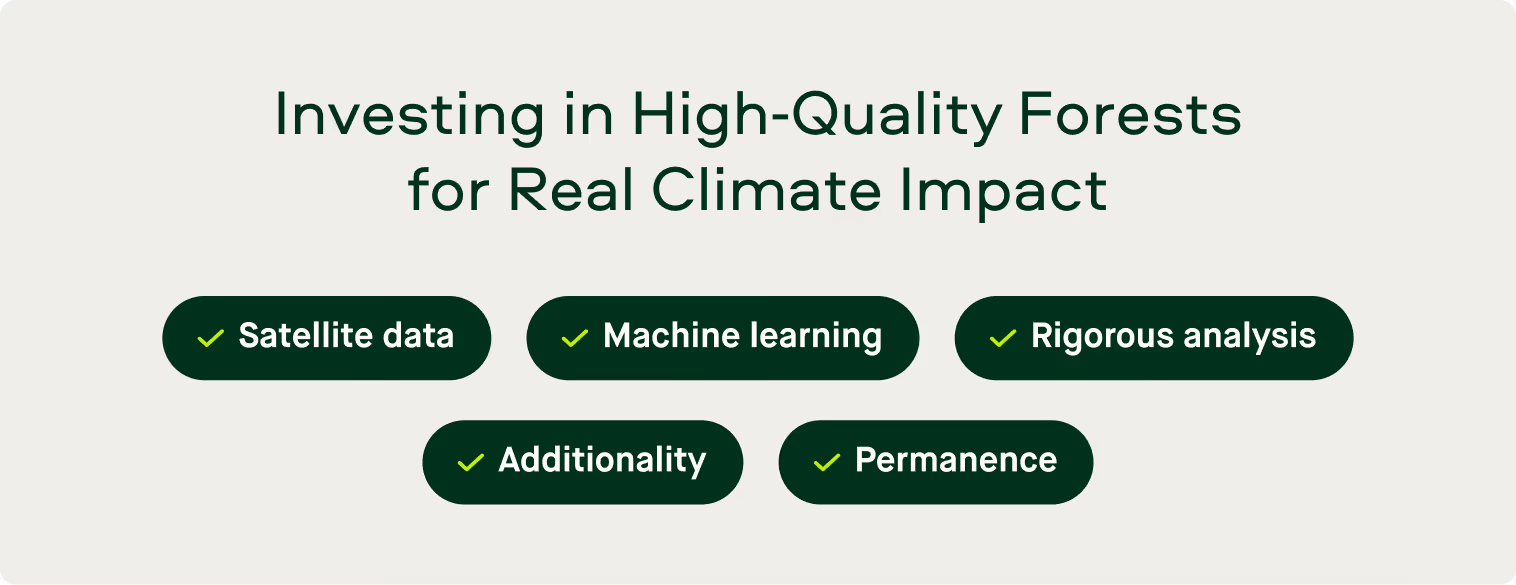
By combining satellite data, machine learning, and rigorous analysis across carbon, additionality, and permanence, we help buyers invest in high-quality working forests that deliver real climate impact.
Put simply, our independent ratings enable you to build a carbon strategy that supports global climate goals while mitigating risk. Download the white paper for a deeper dive into our IFM framework.

.png)
