


.avif)
.avif)
Confidence for every carbon and commodity decision.




You will learn how to:
.avif)
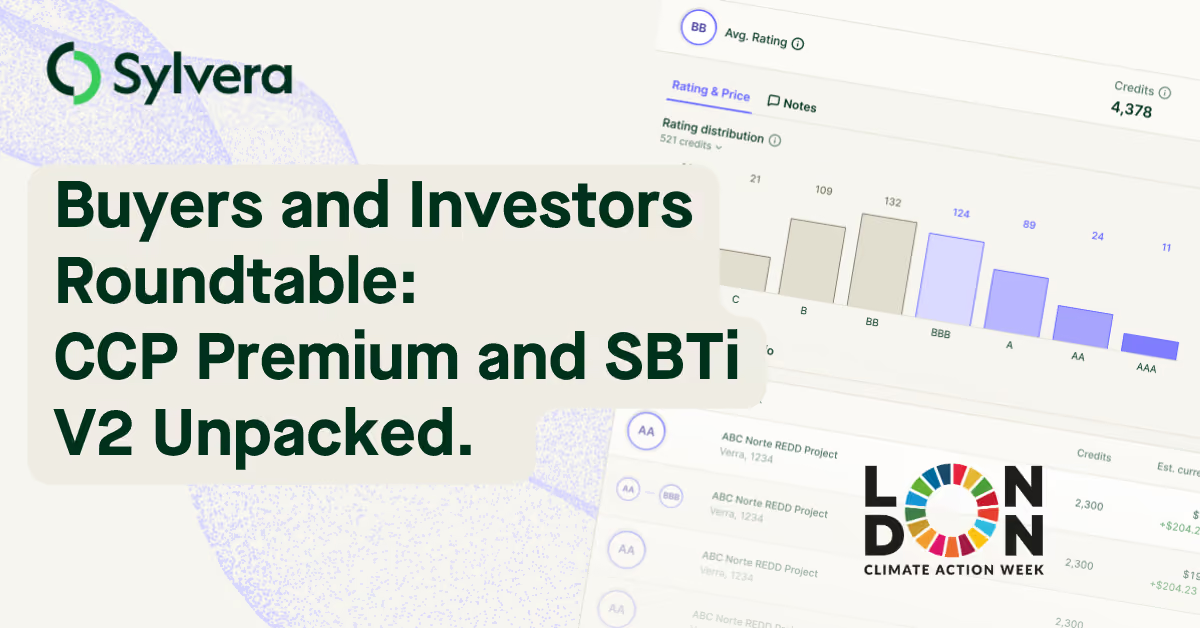
SBTi published Corporate Net-Zero Standard V2 on 11 June, mandatory for reporting from 1 February 2028. ISO has a draft net-zero standard out for consultation, and GHG Protocol will merge its corporate accounting standards with ISO, consulting in Q2 2027. The rules for corporate decarbonisation are evolving, and there are different levers to pull to reduce your scope 1, 2 and 3 emissions and offset what remains.
Now that there's more than one way to hit your decarbonisation goal, the core questions buyers keep asking are simple: what are the real options for me? What does each cost per tonne of carbon? And what can I actually claim for each?
Producers are solving the mirror image of the same problem. What your buyer can claim is what sets what they will pay, and whether you sell the product, the certificate, or both changes the carbon accounting.
Carbon credits, physical lower-carbon supply, and EACs are often priced and evaluated on their own terms. This session puts them in one room to discuss options, strategies and prices.
- What SBTi CNZS V2 changes for carbon credits, lower-carbon products, and EACs, including what insetting means to different companies
- What each purchase does to the buyer's reported number. Which ones reduce the inventory, which ones support a system contribution claim reported separately, and which sit outside it under ongoing emissions responsibility
- Where the green premium lands, and how the value is split between producer and buyer
- Cost per tonne of carbon across the levers, and why some are harder to price and benchmark
- A framework for sequencing decisions while the accounting rules underneath the standard are still moving
- Buyers: procurement, sustainability and commercial teams
- Producers: selling lower-carbon products, certificates, or carbon credits
More panelists to be announced shortly.


.avif)
.avif)

.avif)
.avif)


.avif)
.avif)



.avif)




.avif)
.avif)







.avif)