

“Over the years we’ve invested significantly in our field data team - focusing on producing trusted ratings. While this ensures the accuracy of our Ratings, it doesn’t allow the scale across the thousands of projects that buyers are considering.”

For more information on carbon credit procurement trends, read our "Key Takeaways for 2025" article. We share five, data-backed tips to improve your procurement strategy.
One more thing: Connect to Supply customers also get access to the rest of Sylvera's tools. That means you can easily see project ratings and evaluate an individual project's strengths, procure quality carbon credits, and even monitor project activity (particularly if you’ve invested at the pre-issuance stage.)
Book a free demo of Sylvera to see our platform's procurement and reporting features in action.
Carbon-differentiated commodity markets are becoming central to how decarbonisation is financed across the global economy. As compliance regimes like CBAM, RFNBO standards, and FuelEU Maritime tighten requirements, businesses need reliable data to source low-carbon commodities, invest in production facilities, and navigate complex regulatory frameworks.
However, the effectiveness of these markets relies on transparent, standardised data. Without facility-level carbon intensity measurement or supply and demand visibility, developers can't demonstrate their low-carbon advantage to secure financing, and buyers can't compare options to optimise procurement.
But what data is actually available, and how can it be leveraged by different market players?

What are the different types of carbon-differentiated commodity data?
Facility-Level Data
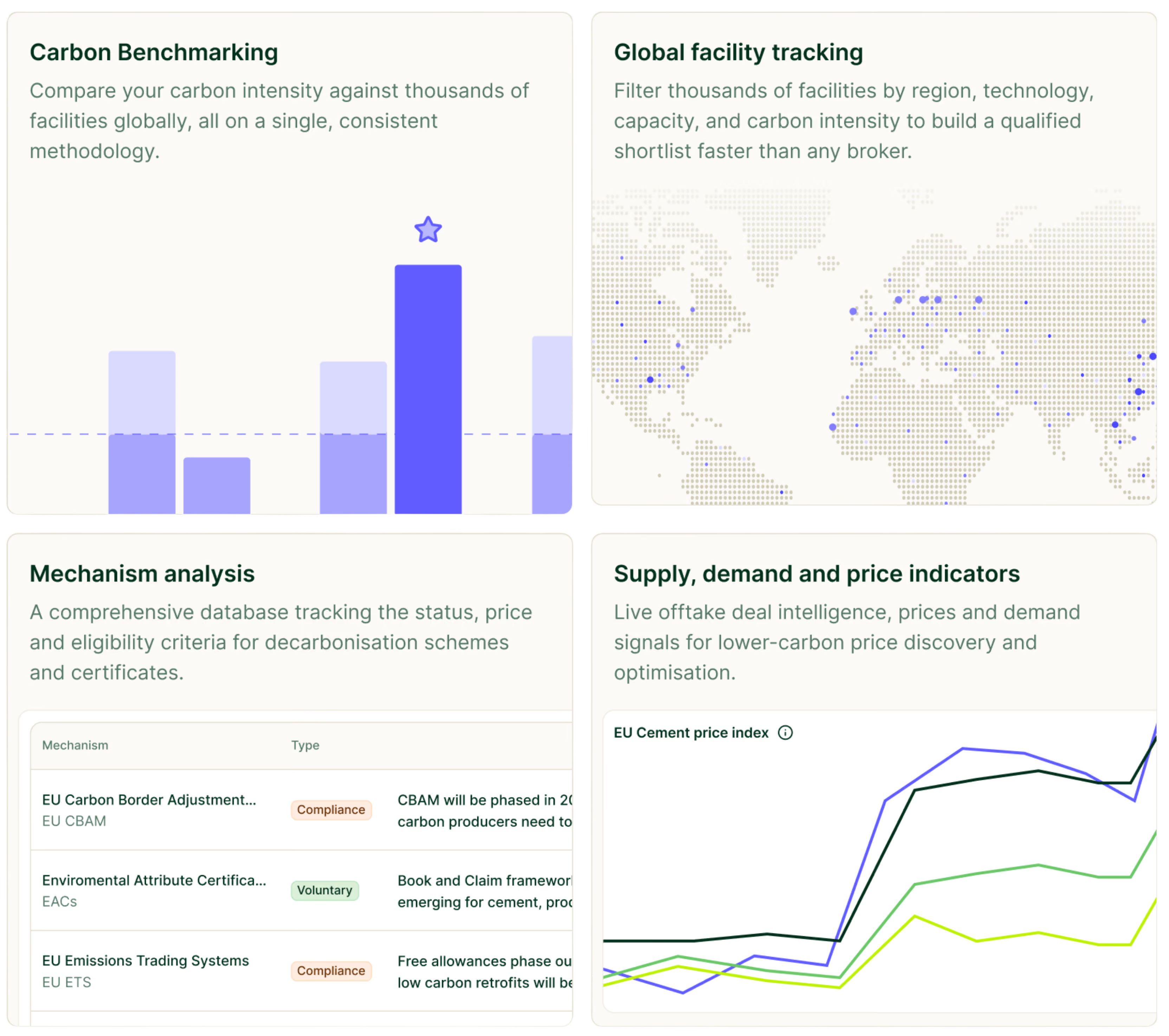
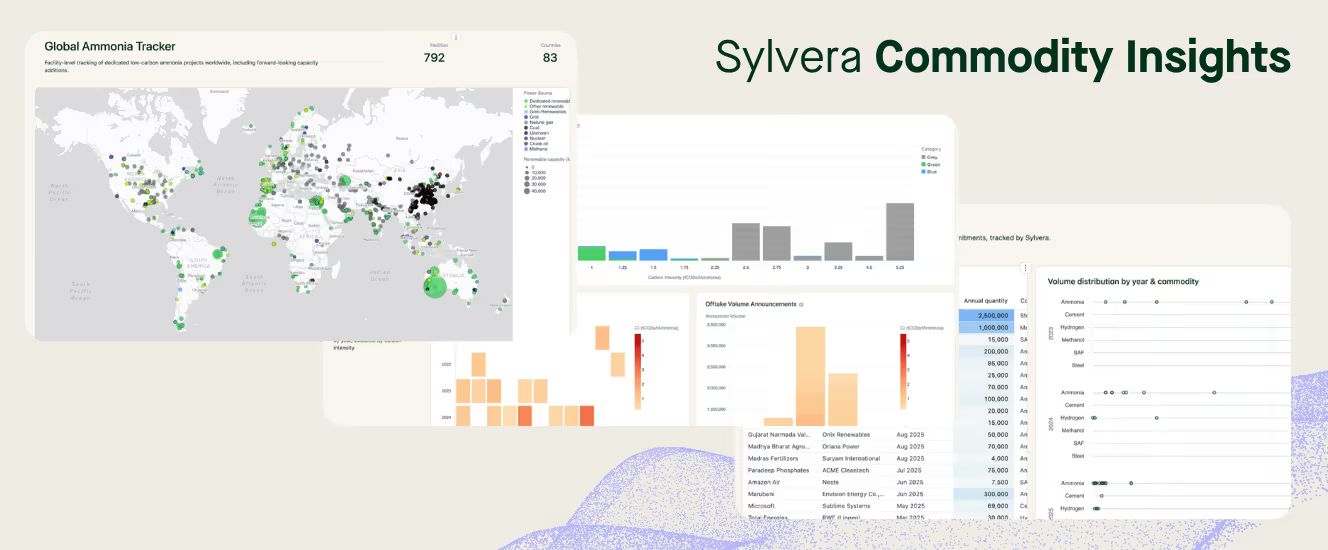
Facility data provides the fundamental understanding of the market's supply side. Sylvera's facility data spans hydrogen, ammonia, and cement production, covering:
- Location and capacity - Where facilities exist globally and their production capacity
- Production method - How commodities are produced (electrolysis, steam methane reforming, CCS-equipped, etc.)
- Development status - Operational, under construction, announced, or planned
- Expected online dates - When new capacity will come to market
- Carbon intensity - facility-level emissions per unit of output, standardised for comparison
This granular view enables market participants to understand not just what is being produced, but where, how, and with what carbon intensity - critical for both compliance and competitive analysis.
Offtake and Demand Data
Tracking committed offtake agreements provides insights into market demand:
- Buyer and seller relationships - Who's purchasing from whom
- Volume commitments - How much capacity is already contracted
- Agreement terms - Duration, pricing structures, and delivery schedules
- Geographic patterns - Where demand is concentrated and emerging
- Commodity preferences - Which production methods and carbon intensities buyers are choosing
For example, if a particular region or production method is consistently attracting long-term commitments over spot deals, that's a strong signal of where buyers see the market heading and where supply security is already becoming a concern.
Supply and Demand Intelligence
Strategic market intelligence aggregates facility and offtake data to reveal broader patterns:
- Capacity build-out timelines - When and where new supply will enter the market
- Supply-demand gaps - Regions and commodities where committed demand exceeds announced supply (or vice versa)
- Competitive landscape - Concentration of production by geography, method, and carbon intensity
- Market maturity indicators - Which segments are moving from announcement to FID to operation
This intelligence layer helps market participants understand not just individual facilities or deals, but the structural dynamics shaping the market.
Carbon Intensity Data
Understanding facility-specific carbon intensity is essential as compliance regimes and voluntary buyers increasingly differentiate based on emissions:
- Standardised carbon intensity calculations - Consistent methodology across facilities and commodities
- Mechanism eligibility - Which facilities qualify for RFNBO, CBAM compliance, Article 6, or other frameworks
- Comparative benchmarking - How facilities rank against competitors and regulatory thresholds
- Value intelligence - What low-carbon attributes are worth across different monetisation pathways
This data is particularly important as the market shows clear price premiums for lower carbon intensity. Our analysis shows facilities with demonstrably lower carbon intensity securing offtake agreements 3-6 months faster than higher-intensity competitors, while buyers increasingly filter procurement by specific carbon intensity thresholds to meet compliance requirements.
How different market players can use this data
Producers and developers
Producers and developers navigate critical decisions about where to build capacity, how to position their facilities competitively, and how to attract offtakers and investors. Commodity data empowers them to make these decisions with confidence.
For those building or operating low-carbon production facilities, commodity data offers:
- Competitive positioning - Benchmark your facility's carbon intensity against competitors in your region and production method
- Demand visibility - Identify active buyers, understand what carbon intensity thresholds they're targeting, and track offtake patterns in your commodity
- Investment case building - Show investors the supply-demand dynamics, capacity gaps, and market timing that make your facility viable
- Market timing intelligence - Know when competing capacity is expected online to inform your go-to-market strategy
- Mechanism eligibility assessment - Understand which regulatory frameworks your facility qualifies for and what value they enable
Example case study:
A green hydrogen producer in the Middle East planning facility expansion uses commodity data daily to inform their strategic decisions. They closely monitor offtake announcements from European buyers, allowing them to identify potential customers before competitors approach them.
Before committing to a €200M expansion, they use the data to analyse supply gaps in their target geography, demonstrating to investors that committed European demand significantly exceeds announced supply in their production corridor. The carbon intensity benchmarking also helps them structure offtake negotiations by showing their facility ranks in the top quartile for carbon intensity among comparable projects - justifying premium pricing terms.
Corporate buyers and procurement teams
Corporate buyers navigate the trade-off between cost, carbon intensity, and supply security. Whether procuring for CBAM compliance, supply chain decarbonisation targets, or voluntary commitments, this data enables informed sourcing decisions.
For companies purchasing low-carbon commodities, data provides:
- Supply discovery - Find facilities by commodity, geography, production method, and carbon intensity that meet your requirements
- Deal benchmarking - Compare offtake terms, pricing structures, and volume commitments against market standards
- Strategic sourcing - Identify where supply is emerging relative to your needs and approach producers directly or through partners
- Compliance planning - Filter facilities by mechanism eligibility (RFNBO, CBAM, CORSIA) to ensure purchases meet regulatory requirements
- Delivery risk monitoring - Track whether suppliers are on schedule and if competing demand might constrain availability
Example case study:
A sustainability director at a major airline planning CORSIA compliance and exploring low-carbon aviation fuel (LCAF) options uses the platform to understand emerging supply. They monitor new LCAF production facilities in regions with established supply routes to their hubs, enabling early engagement with producers before capacity is committed.
When evaluating procurement options, they use carbon intensity data to compare the climate benefit of different LCAF sources against sustainable aviation fuel or carbon credits, helping them optimise their compliance strategy across multiple mechanisms. Tracking offtake agreements also helps them understand how much available capacity is already contracted, informing timing decisions on when to move on procurement.
Introducing Sylvera's Commodity Insights
Sylvera's Commodity Insights has been designed to address the critical challenges faced by carbon-differentiated commodity market participants.
- For producers and developers - Understand your competitive landscape, find demand, and build compelling investment cases
- For buyers - Discover supply, benchmark deals, and plan sourcing strategies that meet compliance requirements
Comprehensive and integrated
Get a complete view of carbon-differentiated commodity markets while focusing on what matters most for your specific needs:
- Global facility coverage - Track production across hydrogen, ammonia, cement, and crude oil with facility-level detail on location, capacity, production method, and development status
- Offtake intelligence - Monitor committed agreements, buyer-seller relationships, and volume commitments that reveal true demand
- Supply-demand dynamics - Understand market structure, capacity timelines, and where gaps or concentrations exist
Want to try this data for yourself? Sylvera’s Commodity Insights are available free access right now. Try for free here.