Not all REDD+ credits are equal
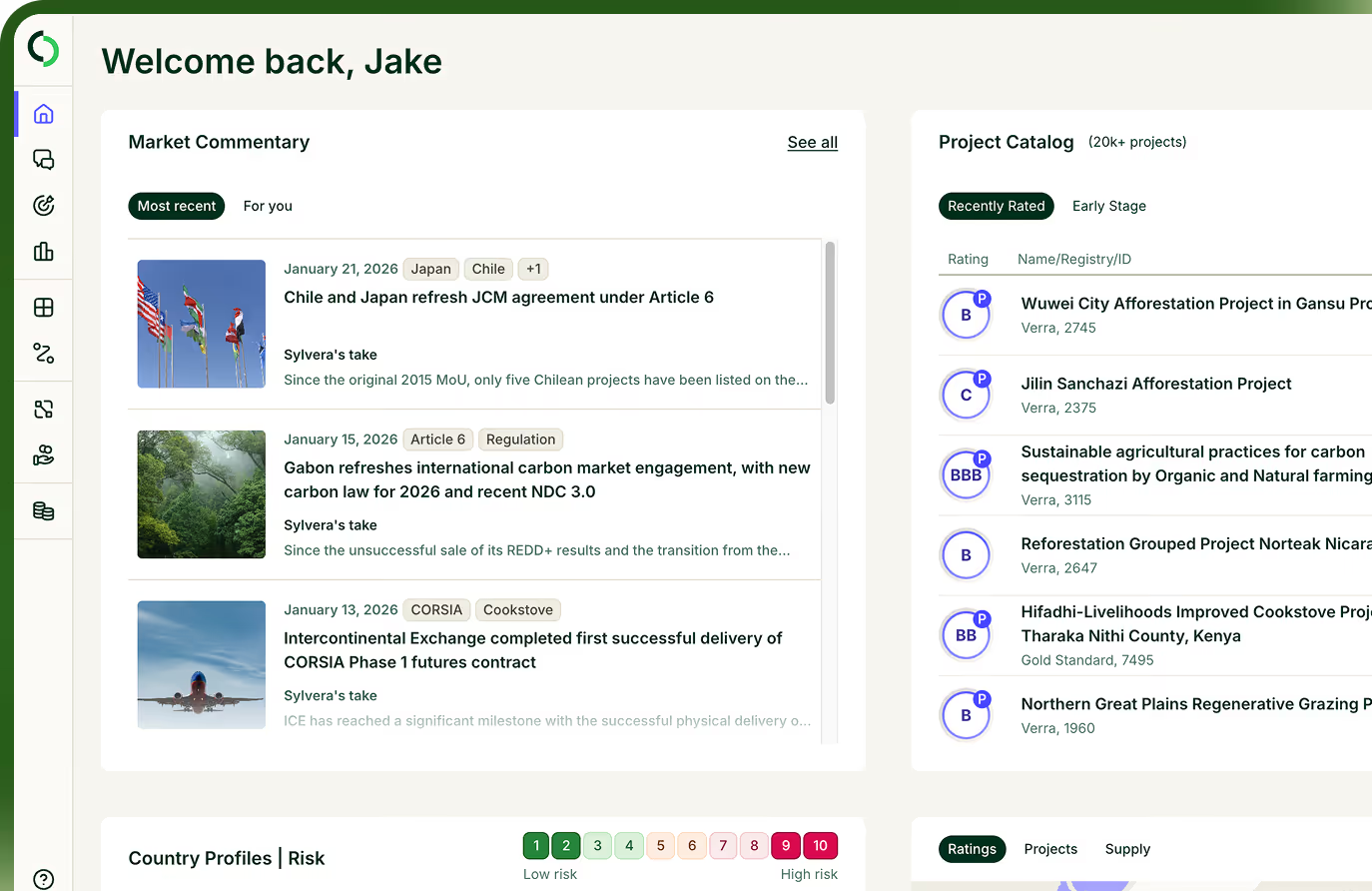
REDD+ (avoided deforestation) is the most scrutinized category in the voluntary carbon market. Sylvera’s independent Ratings help you find the credits that stand up to diligence — before you commit budget.



.avif)






The most-questioned category deserves the most rigorous data
REDD+ has faced more media scrutiny, buyer diligence, and regulatory questioning than any other project type. That scrutiny is exactly why quality data matters: the gap between a credible avoided-deforestation project and a weak one is wide, and it does not show up on a registry listing.
Sylvera was founded on forest carbon, and REDD+ remains our deepest-rated category — the most rated projects and the most published data of any project type we cover. When you need to know whether a REDD+ credit is real, that depth is what separates an informed decision from a hopeful one.
The market is recovering, and quality is repricing
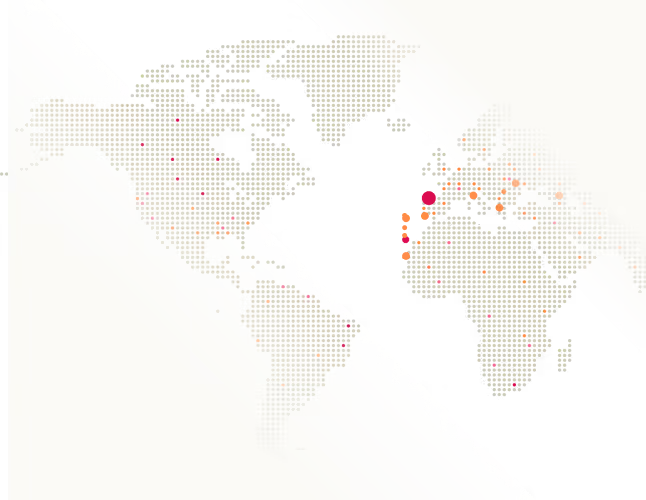
REDD+ recovered to roughly 25% of market retirements in Q1 2026. High-rated credits (BBB+ and above) now average $9.60 per tCO₂e, up for three consecutive quarters. Buyers are returning — but they are returning selectively, paying for integrity rather than volume.
That is the opportunity and the risk. A credible REDD+ credit protects your claim and your reputation; a weak one exposes both. Independent Ratings tell you which is which.
How Sylvera assesses REDD+ quality
Carbon accounting
Whether the claimed avoided emissions are real, measurable, and not overstated by baseline choices.

Additionality
Whether the deforestation would genuinely have happened without the project.

Permanence and leakage
Whether protected carbon stays stored and whether deforestation simply shifts elsewhere.
Co-benefits and safeguards
The community and biodiversity outcomes that increasingly drive premium demand.

FAQs
Some are, some are not — and the difference is measurable. High-integrity REDD+ projects deliver genuine, additional emissions avoidance; weaker projects overstate their impact through inflated baselines or ignore leakage. The point of an independent rating is to tell the two apart on the evidence, rather than on the registry label.
Sylvera rates individual projects, not the category as a whole, across an AAA to D scale. A project type is never uniformly good or bad; within REDD+ you will find projects across the full range, which is why buyers screen at the project level before procurement.
Assess carbon accounting, additionality, permanence, leakage, and safeguards — then benchmark price against quality. Sylvera Ratings and Market Commentary bring those factors into a single view so you can compare projects on a like-for-like basis.
In Q1 2026, high-rated REDD+ credits (BBB+ and above) averaged $9.60 per tCO₂e, and that figure has risen for three consecutive quarters. Lower-rated credits trade well below this, which is why a price on its own tells you little without a quality benchmark.
Confidence for every carbon and commodity decision.
REDD+ can be a credible, cost-effective part of a climate portfolio — but only when you can see which projects hold up. Sylvera Ratings give you independent, project-level evidence so you can procure REDD+ credits with confidence and defend the decision later.