

“Over the years we’ve invested significantly in our field data team - focusing on producing trusted ratings. While this ensures the accuracy of our Ratings, it doesn’t allow the scale across the thousands of projects that buyers are considering.”

For more information on carbon credit procurement trends, read our "Key Takeaways for 2025" article. We share five, data-backed tips to improve your procurement strategy.

One more thing: Connect to Supply customers also get access to the rest of Sylvera's tools. That means you can easily see project ratings and evaluate an individual project's strengths, procure quality carbon credits, and even monitor project activity (particularly if you’ve invested at the pre-issuance stage.)
Book a free demo of Sylvera to see our platform's procurement and reporting features in action.
For anyone trying to navigate the carbon credit market - whether to procure credits, raise capital, or benchmark a portfolio, the challenge isn't a lack of data. It's the absence of a structured, reliable way to make sense of it.
Buyers spend hours piecing together developer backgrounds from registries, third-party databases, and broker calls. Project developers have little visibility into how they compare to competitors, or whether the right buyers are even aware they exist. Investors conducting pre-investment screening face the same fragmented picture, with no consistent way to evaluate developer quality or track performance over time.
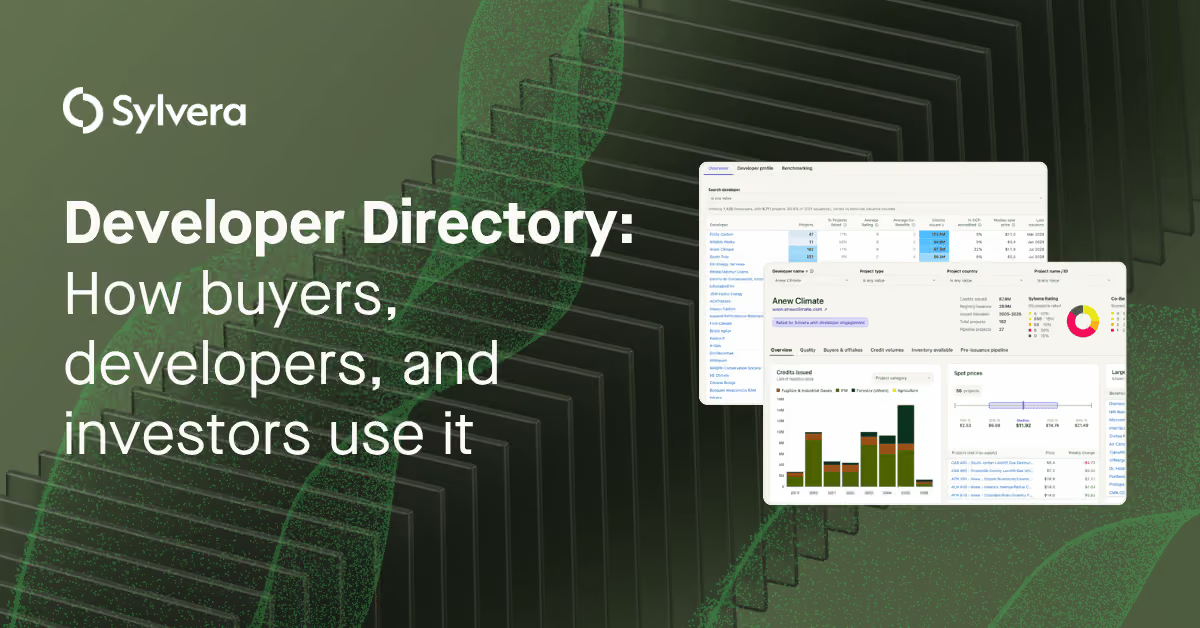
The Sylvera Developer Directory was built to solve that. It's a searchable, data-rich directory of project developers, sitting within Sylvera’s Market Intelligence suite, with individual profiles covering supply, quality, pricing, and buyer history. And it’s updated daily.
What is the Developer Directory?
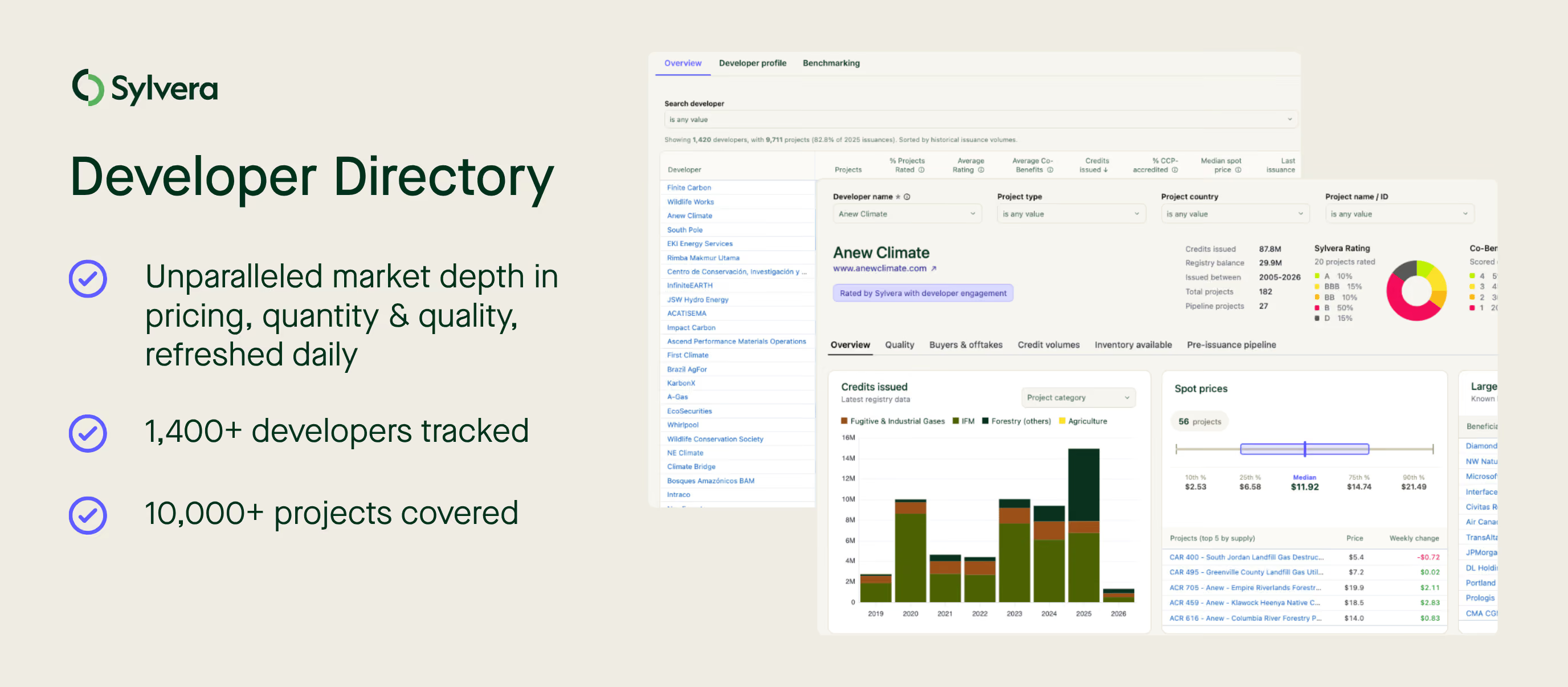
The Developer Directory gives users a structured view of over 1,400+ developers tracked by Sylvera, across more than 10,000 projects. Each developer has a profile that surfaces:
Total issuance, registry balance, and issuance history - a clear picture of supply track record
Pipeline projects - upcoming supply before it hits the market
Distribution of Ratings and prices - quality and pricing context across a developer's portfolio
Known buyers - which companies have retired credits from this developer, and at what volumes
The directory is filterable by project type, region, price, and compliance eligibility, so users can cut directly to the developers relevant to their criteria. A benchmarking tab lets developers and analysts compare performance across peer groups - by total issuance, weighted average Rating, and co-benefit scores.
The data refreshes daily, important in a market where issuance volumes, Ratings, and buyer activity shift constantly.
How the Developer Directory helps corporate buyers
Corporate buyers procuring carbon credits face a recurring problem: they can identify available supply, but vetting the developer behind the credits is slow and inconsistent. Registry data tells you what was issued. It doesn't tell you whether the developer is reputable, what other buyers have paid, or how quality has trended over time.
The Developer Directory addresses that directly.
Vet the developer behind the credit. Each profile provides a clear background summary of a developer's portfolio, Ratings, and known buyers - giving procurement teams the context to buy with confidence rather than relying on broker assurances.
Find credible suppliers that meet your criteria. Search by region, project type, price, and compliance eligibility to build a shortlist of reputable developers without starting from scratch each cycle.
Check the prices others have paid. Median prices and known buyer data show whether the terms you're being offered are in line with the market - removing the information asymmetry that brokers have historically exploited.
Ground your strategy in market evidence. Tracking developer issuance and Ratings trends over time helps buyers manage counterparty risk across multi-year procurement relationships.
Example: A corporate buyer using Developer Directory
A sustainability team at a large consumer goods company is building its 2026 carbon credit procurement plan. They need high-quality forestry credits from Southeast Asia, with CORSIA eligibility a bonus. Rather than working through a broker list, they open the Developer Directory, filter by project type (forestry), region (Southeast Asia), and compliance eligibility.
They get a shortlist of developers meeting their criteria, with Ratings distributions, issuance history, and known buyers visible at a glance. They can immediately see which developers other companies like theirs have bought from, what median prices look like, and how quality has changed year-on-year.
What previously took two weeks of back-and-forth now takes an afternoon. And they go into negotiations knowing what fair pricing looks like.
How it helps project developers
Most project developers know their own projects well. What they typically lack is visibility into how they sit relative to the market - and whether the buyers they want to reach are even aware they exist.
See where you stand against peers. The benchmarking tab lets developers compare their Ratings, prices, and issuance against comparable developers in the same project types and regions. That comparison is difficult to do without a structured data source — and most developers are operating without it.
Understand what buyers pay. Median prices and known buyer activity across the directory show the competitive landscape developers are selling into, so pricing conversations can be grounded in evidence rather than speculation.
Track competitors' supply activity. Monitor changes in peers' issuance volumes and Ratings over time, and use that intelligence to time issuances more strategically.
Showcase pipeline supply before it hits the market. Developers can list upcoming projects to increase buyer visibility before credits issue, getting into procurement conversations earlier, with buyers who are actively building forward supply pipelines.
Example: A project developer using Developer Directory
A mid-sized forestry developer in Latin America is preparing for its next issuance and wants to understand how it compares to peers before approaching buyers. It opens the benchmarking tab, filters to forestry developers in South America, and immediately sees that its weighted average Rating is in the top quartile for its peer group - but that its median spot price is c.15% below comparable developers.
So, it finds out it may be underpricing relative to quality. It can also see the companies that have retired credits from peer developers, giving a targeted outreach list for the first time. An upcoming pipeline project is now in the directory, signaling supply availability to buyers who are actively screening for forestry credits in the region. Two months before issuance, it has three active conversations with procurement teams it hadn't previously been in contact with.
How it helps investors
For investors conducting origination or due diligence on carbon project developers, the challenge is efficiently assessing track record, quality trajectory, and market positioning across a large and fragmented universe.
Run background checks in minutes. A clear summary of each developer's portfolio, Ratings, prices, and known buyers accelerates origination diligence - replacing a process that typically requires pulling data from multiple registries and sources.
Find reputable developers meeting your criteria. Search by region, project type, price, and compliance eligibility to build a shortlist that fits your mandate, without working through intermediaries.
Find early-stage supply. Developers' pipeline projects are visible in the directory, so investors can identify opportunities before they reach the market - and approach developers at the stage where capital is most needed and most valued.
Monitor developer performance over time. Track changes in issuance volumes and Ratings to catch improving - or deteriorating - performance early, and manage portfolio exposure accordingly.
Example: An investor using Developer Directory
A carbon-focused investment fund is assessing potential origination opportunities in the Americas. It opens the Developer Directory, filters to developers with forestry and land-use portfolios in South America, and applies a quality filter to surface developers with above-average Ratings distributions. It can see each developer's issuance trajectory, pipeline supply, and known buyers - and flag any developers with legal or adverse media indicators.
For three developers that meet its criteria, it runs a side-by-side comparison using the benchmarking tab, assessing relative quality, pricing, and issuance growth. It identifies one developer with a strong Rating trajectory and a significant pipeline of unlisted projects - an early-stage opportunity that, without the directory, it would likely never have found.
Try the Developer Directory
The Developer Directory sits within Sylvera Market Intelligence. To see it in action and explore how it can support your procurement, investment, or competitive intelligence workflows - book a demo with our team.