
“Over the years we’ve invested significantly in our field data team - focusing on producing trusted ratings. While this ensures the accuracy of our Ratings, it doesn’t allow the scale across the thousands of projects that buyers are considering.”

For more information on carbon credit procurement trends, read our "Key Takeaways for 2025" article. We share five, data-backed tips to improve your procurement strategy.

One more thing: Connect to Supply customers also get access to the rest of Sylvera's tools. That means you can easily see project ratings and evaluate an individual project's strengths, procure quality carbon credits, and even monitor project activity (particularly if you’ve invested at the pre-issuance stage.)
Book a free demo of Sylvera to see our platform's procurement and reporting features in action.
Company: CURA
Industry: Low-Carbon Cement
Region: Global
Plant size: 634,000 TPA Use case: Proving integrity and unlocking value in low-carbon cement
Sylvera solutions used: LCA review, Mechanism Eligibility, Commodity Insights
Results: Independent validation of low-carbon claims, clear monetisation pathways identified, and stronger positioning with buyers and investors
CURA has developed electrochemical technology capable of transforming the cement industry. But having breakthrough technology is only half the challenge.
To close offtake agreements and attract investment, CURA needed to prove their carbon intensity claims independently — and understand exactly how to monetise their low-carbon advantage across a complex and evolving regulatory landscape.
By partnering with Sylvera, CURA received an independent review of their lifecycle emissions, benchmarking against thousands of global facilities, and bespoke financial modelling across three distinct monetisation mechanisms.
The result: validation that gives buyers and investors the confidence to act, tools to evaluate different scenarios and a clear roadmap for capturing major long-term value.
The challenge
Proving integrity and unlocking value in a fragmented market
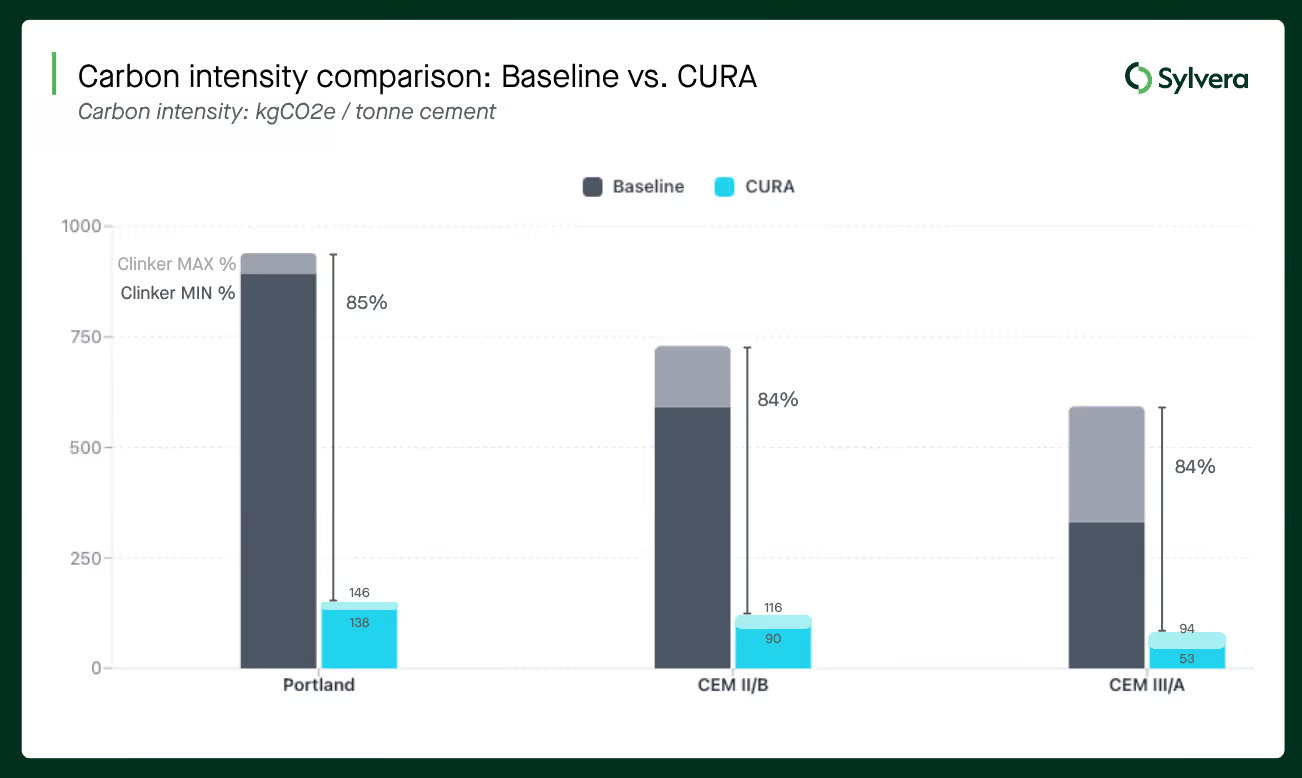
CURA's electrochemical technology uses clean electricity to split limestone into lime and pure CO₂, enabling production of low-carbon lime and cement with existing feedstocks. At full deployment, this delivers 85% reduction in emissions compared to conventional cement production.
But in a market where carbon intensity figures are typically self-reported, that advantage was difficult to prove. CURA faced three core challenges:
1. Credibility with buyers and investors.
Without independent verification, even strong carbon intensity figures are treated with scepticism. Buyers and investors conducting due diligence need third-party validation before committing to offtake agreements or deploying capital.
2. Navigating a complex mechanism landscape.
Multiple monetisation routes exist, each with different eligibility requirements, timeframes, and financial profiles. Understanding which to prioritise, what each was actually worth, and delivering this quickly, required specialist knowledge and capabilities.
3. Competitive positioning.
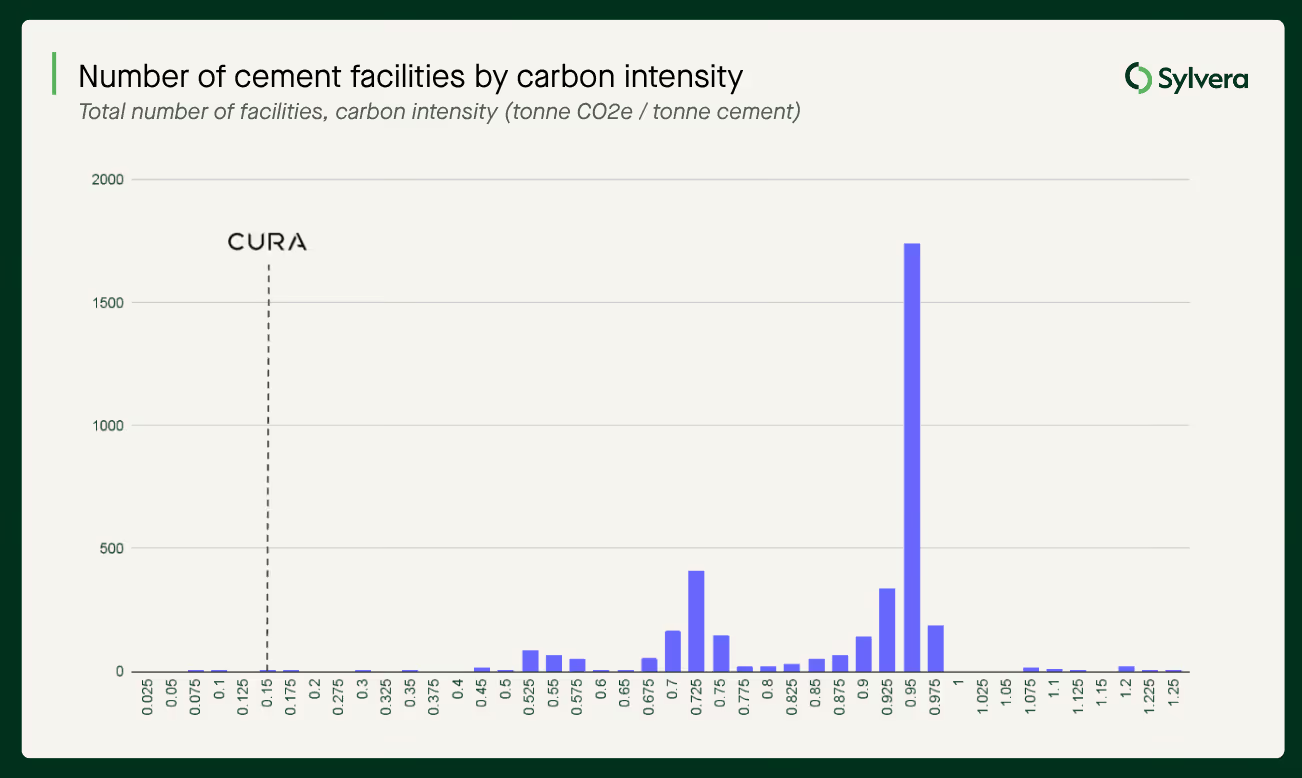
With 3,000+ cement plants operating globally, CURA needed a way to show buyers and investors not just that they were low-carbon, but how far ahead of the market they actually were — on a standardised, comparable basis.
"We knew our technology was a differentiator, but in commercial conversations, self-reported figures only get you so far. We needed a credible, independent voice to back up our claims and give us the strongest, most credible possible market position."
Erin Bobicki, CEO, CURA
The solution
A trusted partner with the tools to turn low-carbon performance into commercial value
CURA needed a partner with deep expertise in carbon and commodities markets, standardised frameworks for comparing performance across facilities at scale, and financial modelling to translate carbon intensity into revenue.
Sylvera's work across carbon credit and commodity markets provides the independent credibility that buyers and investors require. And Sylvera's Cement Framework, benchmarking the carbon intensity of 3,165+ plants globally, offered something no standalone LCA report could: a clear, apples-to-apples comparison of where CURA sits relative to the market.
Sylvera worked with CURA across three interconnected workstreams: validating their LCA, mapping mechanism eligibility, and building the financial models to show what each pathway was worth.
LCA Integrity: Building the foundation of trust
Sylvera independently stress-tested CURA's lifecycle assessment model against leading datasets, corrected methodology gaps, and conducted scenario analyses to understand how different conditions affected carbon intensity outcomes.
The findings were clear. CURA’s technology delivered:
85% emission reductions at full deployment, consistent across all cement types and geographies assessed.
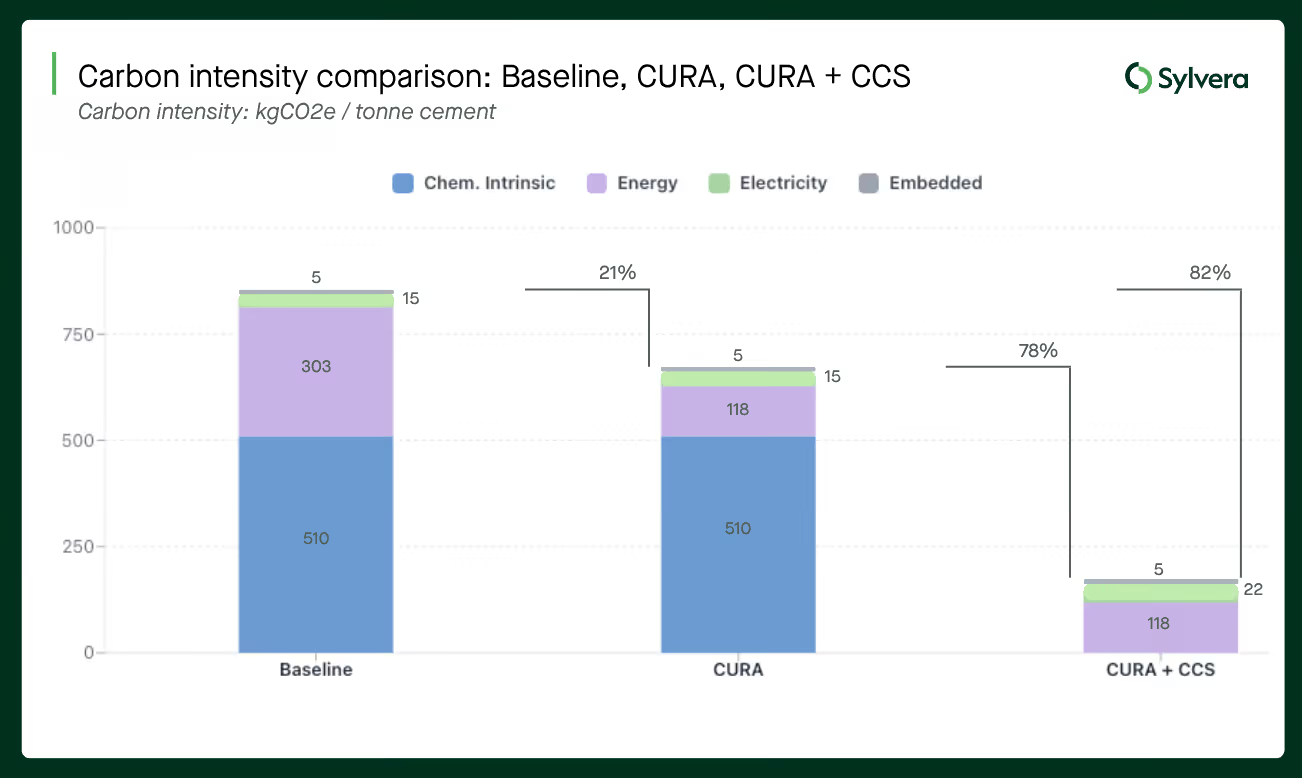
29–31% reductions even without carbon capture and storage, driven by lower energy demand and fuel selection.
21–24% reductions in retrofit scenarios,proving the value is embedded in the process — not dependent on greenfield conditions.
This report gives buyers and investors verified, third-party evidence — removing a key friction point from commercial conversations.
Mechanism Eligibility & Monetisation: Understanding what the advantage is worth
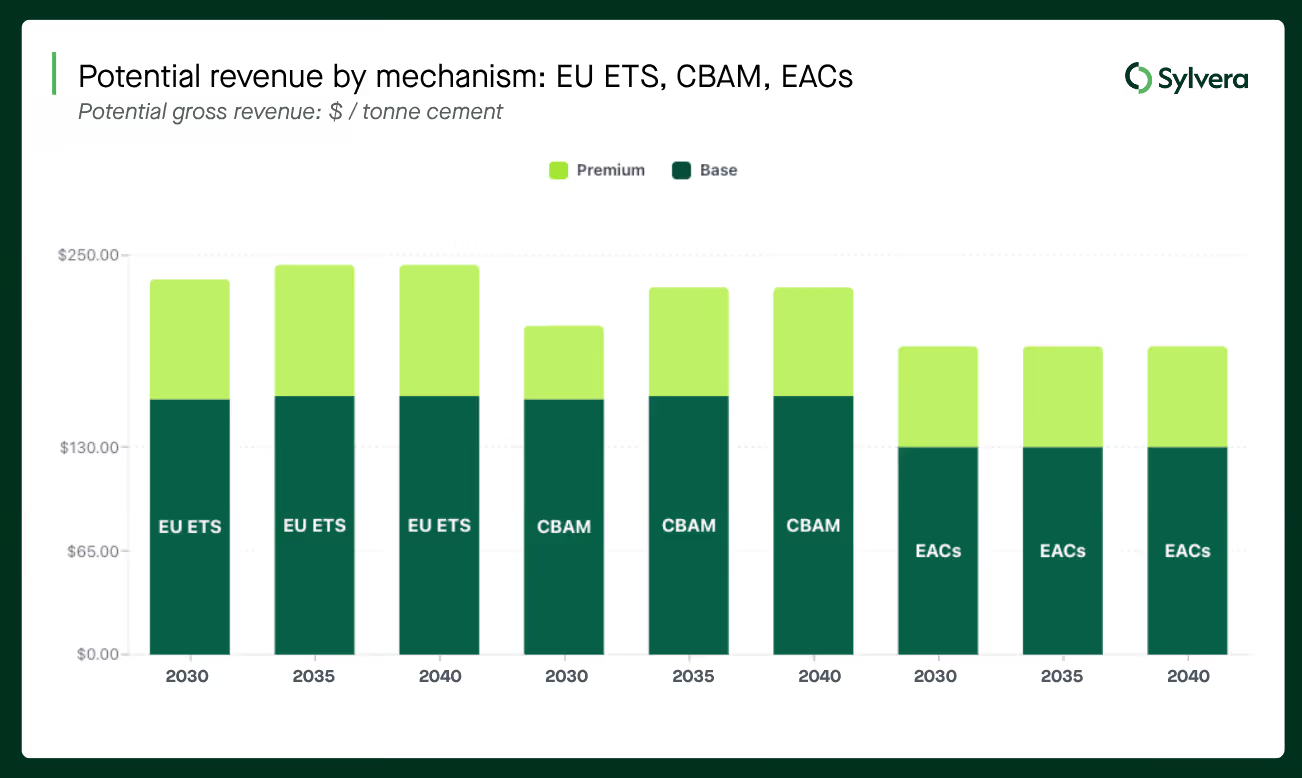
Sylvera conducted an evaluation of the full range of monetisation mechanisms available to CURA, before selecting the three most relevant pathways for deeper analysis and bespoke financial modelling.
Each mechanism was assessed across three dimensions:
- Eligibility (can CURA access it?),
- Integrity (will the claims hold up?),
- Value (what's it worth?)
This gives CURA the complete picture needed to make strategic decisions and hold credible conversations with partners.
- Environmental Attribute Certificates (EACs)
EACs represent the clearest near-term path. With minimal regulatory burden and proven additionality, CURA can target $61–$100+/t cement in additional revenue, with demand coming from tech companies with internal carbon prices, corporate sustainability leaders, and multinational construction firms under regulatory pressure.
Sylvera's assessment confirmed CURA meets the highest integrity bar — including financial additionality and carbon accounting rigour — future-proofing their EACs as buyer requirements tighten.
- EU ETS (Emission Trading Scheme)
EU ETS offers the greatest long-term upside. At full deployment, CURA's carbon intensity of 139 kgCO₂e/t sits 78% below the current ETS benchmark of 660 kgCO₂e/t — a position that translates into €409M NPV over 25 years.
Sylvera’s scenario analysis tool enabled CURA to explore this value across different deployment scenarios, carbon price trajectories, cement types, and competitive benchmarks.
- CBAM (Cross-Border Adjustment Mechanism)
CBAM becomes increasingly valuable as EU carbon costs rise, converging with EU ETS by 2034. Sylvera's CBAM model enables CURA to assess the competitive pricing advantage of importing low-carbon cement into the EU, with a modelled €307M NPV over 25 years at full phase-in.
Ongoing market intelligence: Staying ahead in a fast-moving landscape
The relationship with Sylvera is long-term. Through Sylvera's live market data, CURA has ongoing access to the intelligence needed to stay competitive as the market evolves.
This includes continuous benchmarking against 3,165+ global cement plants — giving CURA a real-time view of where they sit relative to competitors on a standardised, apples-to-apples basis. As new facilities come online and the regulatory landscape shifts, that picture changes. Sylvera's platform means CURA doesn't have to track it alone.
Beyond benchmarking, CURA can draw on Sylvera's expertise to monitor mechanism developments, track pricing dynamics across mechanisms and monetisation pathways, and model new scenarios as their commercial strategy evolves.
"Sylvera helped us understand the full commercial picture. Having bespoke financial models for each mechanism means we can walk into any conversation with buyers or investors and show them exactly what our low-carbon advantage is worth."
Erin Bobicki, CEO, CURA
The Results
From validated technology to commercial-ready advantage
Sylvera's work gave CURA the infrastructure and intelligence to accelerate commercial activity - and negotiate from a position of strength.
1. Independent validation that moves buyers and investors faster
A Sylvera-verified assessment carries weight that self-reported figures cannot. With a report confirming 85% emission reductions, CURA can reduce due diligence timelines and move interested parties from interest to decision faster — whether that's an offtake agreement or an investment commitment.
2. A clear view of monetisation potential across three pathways
Rather than navigating the mechanism landscape alone, CURA now has bespoke financial models showing the potential value of EACs, EU ETS, and CBAM. The analysis gives CURA the numbers to make a compelling case to partners and buyers.
3. Competitive positioning backed by live data
Benchmarking against 3,000+ global facilities on a standardised carbon intensity scale means CURA can show — not just claim — that they are a market leader. And because that picture updates as the market evolves, CURA's positioning remains grounded in current data rather than a snapshot in time.
4. A platform for ongoing market navigation
The regulatory landscape for carbon-differentiated commodities is moving fast. Through its partnership with Sylvera, CURA has continuous access to data and expertise — tracking mechanism developments, monitoring competitive movements, and modelling new scenarios as their commercial strategy grows. This isn’t a one-off engagement, the ongoing relationship is where the sustained value lies.
"Working with Sylvera has given us something we couldn't build ourselves — independent credibility and an ongoing window into the market. It's changed how we’re able to engage with the market as the landscape shifts, and given our team the tools and confidence to move faster."
Erin Bobicki, CEO, CURA
About CURA
CURA is a Canadian climatetech company developing electrochemical technology to reduce CO2 emissions from cement production. Its CURALYTETM-powered electrolyzer cuts emissions by up to 85% while lowering energy use and manufacturing cost. Designed as a retrofit-ready solution, CURA’s technology integrates with existing feedstocks, infrastructure, and operations. The company’s founders are seasoned climatetech leaders, with experience in scaling technologies to reduce global CO2 emissions. CURA works with partners globally to accelerate the decarbonization of the cement industry.
Sylvera Commodity Insights
Want to try this kind of global commodity data for yourself? Sylvera’s Commodity Insights are available free access right now. Try for free here.

Or, if you’re ready to get started with your own facility-level carbon intensity assessment, get in touch with our specialist team here.