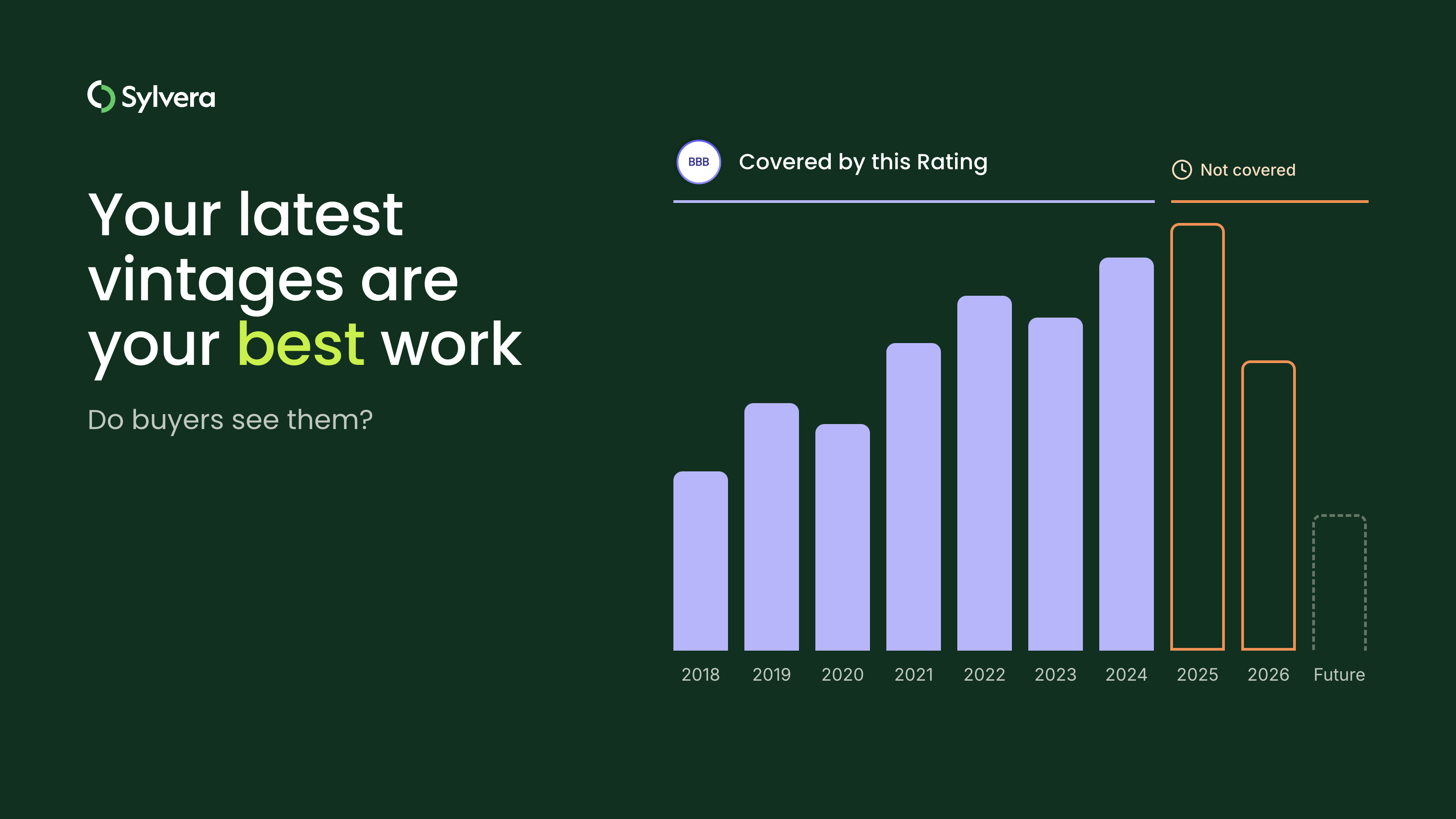


“Over the years we’ve invested significantly in our field data team - focusing on producing trusted ratings. While this ensures the accuracy of our Ratings, it doesn’t allow the scale across the thousands of projects that buyers are considering.”

For more information on carbon credit procurement trends, read our "Key Takeaways for 2025" article. We share five, data-backed tips to improve your procurement strategy.
One more thing: Connect to Supply customers also get access to the rest of Sylvera's tools. That means you can easily see project ratings and evaluate an individual project's strengths, procure quality carbon credits, and even monitor project activity (particularly if you’ve invested at the pre-issuance stage.)
Book a free demo of Sylvera to see our platform's procurement and reporting features in action.
The new SBTi Corporate Net-Zero Standard (Version 2.0), released on 11 June 2026 and taking effect on 1 February 2027, is a significant rewrite, and one change matters more than most for anyone working in hard-to-abate supply chains: commodity certificates (also known as environmental attribute certificates) now have a defined, sanctioned role in how companies deliver their climate targets.
For years, the question of whether you could use a certificate to sell the environmental benefit from low-carbon commodities such as steel, cement, and ammonia sat in a grey zone. V2 removes the ambiguity. It does not wave certificates through, but it does give them a clear place in the system, with guardrails attached.
Underpinning all of this is a deliberate shift in philosophy, with V2 built on a best-efforts framework. SBTi is candid that companies do not control everything: supply chains they have limited visibility into, technologies not yet available at scale, and investment cycles that do not line up with target periods are treated as real constraints rather than excuses.
The expectation is that companies set science-based targets, deploy every lever within their control, and stay transparent about where barriers limit what is possible and what they are doing to address them over time. The expanded role for market instruments, including commodity certificates, follows directly from this logic. It is a way to keep making credible progress where direct action is not yet possible, not a way around the hard work of decarbonising.
What actually changed
V2 introduces an "implementation hierarchy" for delivering targets. Companies are expected to cut emissions at source first, then act within shared systems they buy from or feed into (grids, supply sheds, logistics networks), and only then take broader sector-level action where the first two routes are genuinely constrained.
Market instruments, including commodity certificates, are explicitly recognised as a lever within the second and third tiers, as an interim measure until direct action becomes possible.
The detail that opens the market is the chain-of-custody models SBTi names: mass balance and book-and-claim. Book-and-claim matters because it allows the environmental attribute of a low-carbon commodity to be sold separately from the physical product. That is precisely the mechanism nascent markets need, where physical segregation through the supply chain is not yet possible or economic. Crucially, it lets early demand channel catalytic investment into low-carbon production and help it scale.
SBTi defines a commodity certificate as a third-party-assured market instrument that represents the environmental attributes of an underlying good, product or service, and it applies to any commodity type, not a fixed list.
What it means for companies buying certificates
For buyers, this is a real and credible route to make progress in scope 3 value chains where direct emissions cuts are not yet feasible. On the target-setting side, V2 rewards "volume alignment" targets that increase the share of lower-carbon commodities a company purchases, so the demand signal is built into the framework itself.
However, the bar is high. A buyer cannot simply purchase generic certificates from anywhere and count them. The integrity criteria require that a certificate:
- matches the same activity, product, material, fuel or energy source in the company's own inventory
- comes from the same or a geographically and systemically relevant system the company sources from
- corresponds to activity within roughly 12 months, unless production cycles or vintage rules justify longer
- does not exceed the company's actual activity volume
- sits in a secure registry with serialisation, transparent transfer and retirement, and no double counting
- is third-party assured, with conformance verified through independent assurance for larger Category A companies
Anything bought through certificates that is not in the physical GHG inventory has to be accounted for and reported separately. It does not get blended into headline inventory numbers. For buyers, the practical implication is clear: procurement and sustainability teams now need to scrutinise the quality and provenance of every certificate, not just the price.
What it means for producers
For producers of low-carbon commodities (green steel mills, low-carbon cement plants, biomethane, ammonia producers, etc.), V2 creates a standards-backed demand signal for the environmental attributes they generate. Book-and-claim acceptance means they can monetise those attributes even where they cannot physically trace or segregate the product to a specific buyer.
But not every attribute will be equally sellable into SBTi-aligned demand. V2 includes a system-level impact test: companies can only buy from programs that demonstrably decarbonise the relevant system, for example where demand for low-carbon certificates pulls through more low-carbon supply.
It also bans "carbon bank" style models, where attributes are stacked or concentrated onto a subset of products to overstate outcomes. Attributes have to follow physical flows proportionally.
The takeaway for producers is that integrity is the differentiator. Certificates issued through credible programs, with proper registries, MRV and third-party assurance, will command access to the premium SBTi-aligned demand. Loosely governed or unverifiable attributes will not.
Producers who invest early in robust issuance and documentation will be the ones the market can actually transact with.
What book-and-claim actually gets you (and what it doesn't)
Book-and-claim certificates do not reduce a buyer's reported scope 3 number. V2 draws a hard line between the physical GHG inventory and everything else, and it defines that inventory to use only chain-of-custody models that establish physical traceability to the company, or that average emissions across a shared pool the company actually sources from. Mass balance within such a pool can therefore sit inside the inventory and genuinely shrink the footprint.
Book-and-claim, which by design severs the link between the attribute and the physical flow to the buyer, cannot. Those purchases are accounted for and reported separately, and emissions reduction claims and the meeting of emissions targets still rest entirely on the physical inventory.
The Standard pairs this with a claims ladder. Inventory changes support emissions reduction claims. Direct action in your own value chain supports alignment claims. Book-and-claim purchases support only a system contribution claim: "we are contributing to decarbonising the ammonia (or steel, aviation, etc.) system", not "we cut our emissions." A buyer who blends certificates into a headline reduction figure is making a claim the Standard explicitly prohibits.
So why would a buyer bother?
- Even if it doesn’t change the physical inventory, it demonstrates ambition. V2 assesses targets on a best-efforts basis, and a company that falls short, having bought credible certificates against documented constraints, protects its standing in the framework in a way that doing nothing does not.
- It is the bridge to inventory reductions later. The Standard frames certificates as interim measures, and the certificates bought today fund the supply that eventually becomes physically available in the buyer's own pool, at which point it does reduce the number. SBTi's approach on scope 2, where existing power contracts are grandfathered when the rules tighten, suggests early movers may be similarly protected, though V2 does not extend that guarantee to commodity certificates today.
- SBTi is not the only audience. Other audiences, from customer procurement scorecards to disclosure frameworks, may credit book-and-claim even where SBTi quarantines it, and the GHG Protocol's ongoing work on market instruments may yet give some of these instruments inventory status. If your customer counts your certificates toward their own supplier engagement asks, the purchase has commercial value regardless of your inventory.
- The claim itself is worth having. A registry-backed, third-party-assured contribution claim is a defensible public statement at a time when unsubstantiated green claims carry real regulatory and litigation risk. A quarantined-but-sanctioned claim beats an unsanctioned one.
V2 converts book-and-claim from a footprint-reduction tool into a credibility and market-building tool. Whether that demand signal is strong enough to scale supply is the open question for these markets.
From our recent EAC market survey, we saw that the majority of buyers were waiting for this updated SBTi guidance before committing to purchases.
Bringing it to life: ammonia example
Ammonia is named in the Standard as an in-scope emissions-intensive commodity (Annex A, NACE 20.15), and conventional "grey" ammonia, made from natural gas or coal via the Haber-Bosch process, is highly carbon-intensive. It is also a globally traded, fungible commodity that is shipped and commingled, making it hard for a buyer to trace specific low-carbon molecules to its own site. Low-carbon "green" (electrolytic) or "blue" (fossil fuel with carbon capture) ammonia is scarce and costs more.
That combination, high emissions, real low-carbon alternatives, and no physical traceability, is exactly the situation book-and-claim is built for.
For a buyer, say a fertilizer manufacturer or a shipping company looking at lower-carbon ammonia, it sits in scope 3 as a purchased good. Today, it cannot realistically pipe green ammonia to each of its plants. Under V2, it could instead buy a commodity certificate representing the low-carbon attribute of the ammonia produced elsewhere. Because that is a book-and-claim instrument with no physical link to the buyer's own ammonia, it would be reported separately and support a claim of contributing to decarbonising the ammonia system, rather than reducing the buyer's own scope 3 number.
And it would only qualify at all if the certificate is for ammonia specifically, comes from a geographically or systemically relevant system, falls within the roughly 12-month window, does not exceed the buyer's actual ammonia volume, sits in a credible registry, is third-party assured, and is issued by a program shown to grow low-carbon ammonia supply.
For a producer, a new green ammonia plant can sell its physical product into the commodity market at the prevailing price and separately sell the low-carbon attribute as a certificate to a buyer who needs it, even though the molecules themselves never reach that buyer.
That second revenue stream improves the economics and bankability of building scarce low-carbon capacity, which is precisely the supply pull the framework's system-impact test is designed to reward.
The market implication
SBTI’s CNZ V2 effectively validates the build-out of commodity certificate and book-and-claim markets, and it puts integrity infrastructure at the centre of it. SBTi will recognise credible third-party frameworks, standards and programs, rather than certify instruments itself. That leaves a clear and growing need for registries, MRV, and independent quality assessment to tell high-integrity attributes apart from the rest.
Two caveats are worth keeping in mind. Much of the detail is still to come, with the Standard repeatedly noting that SBTi will develop further guidance and a third-party recognition framework. And although the Standard is published now, it does not take effect until 1 February 2027, with Version 1 remaining available under transitional arrangements, so companies have a clear runway to prepare.
For everyone building these markets- buyers, producers and the infrastructure in between- the signal is unambiguous: commodity certificates are in, and quality is the currency.
Sylvera’s mechanism eligibility assessments across EACs, CBAM, EU ETS and more for supports commodity producers navigating compliance and voluntary scheme complexity.
More Levers, Harder Choices: Carbon Credits, Commodities & EACs Under SBTi V2
Now that there's more than one way to move a scope 1/2/3 number, the core questions buyers keep asking is simple: what are the real options? What does each cost per tonne? And where do they actually count?
Carbon credits, physical lower-carbon supply, and EACs are usually priced and evaluated on their own terms. This webinar will place them in one room and price them against each other.